










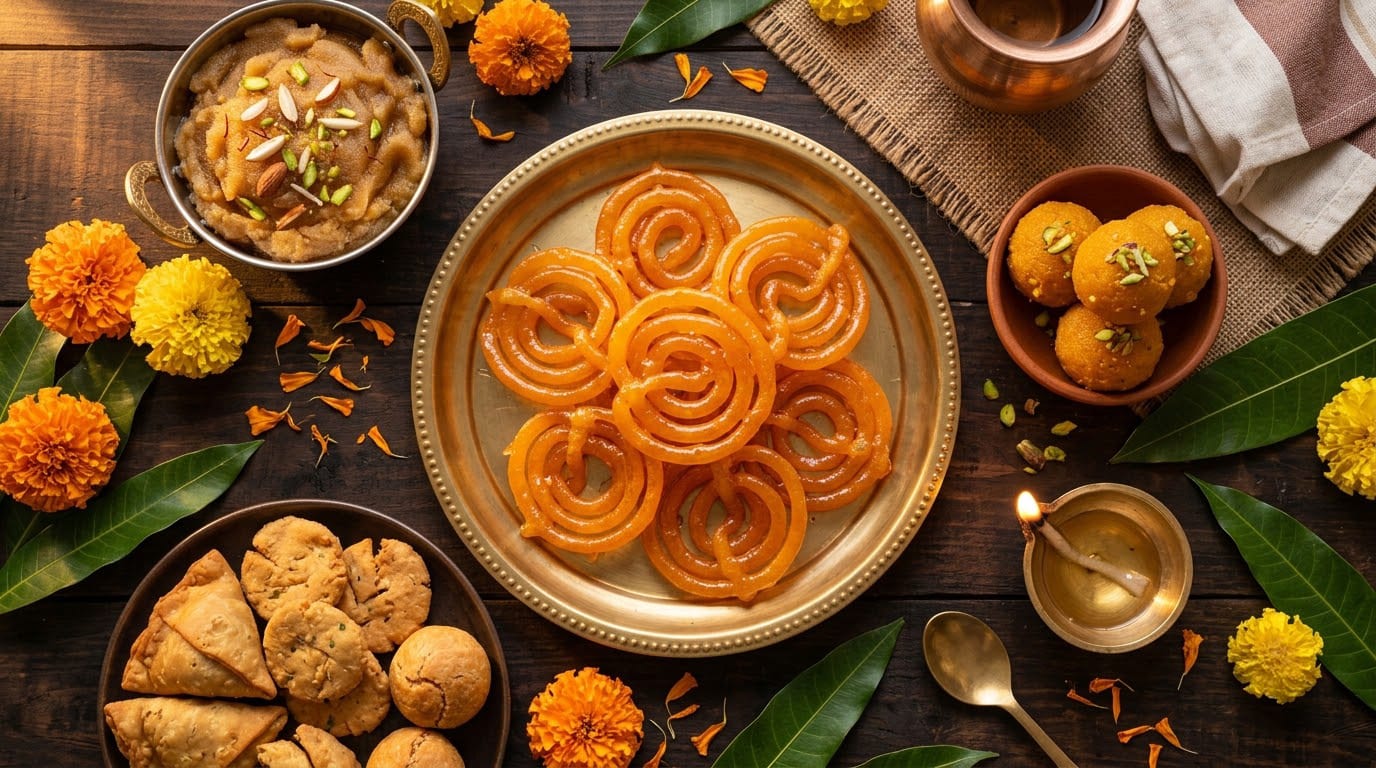
Dussehra 2026 falls on Tuesday 20 October, the day after Navratri ends. For nine nights people have been fasting, and on the tenth the fast breaks.
That structure explains most of what gets eaten. Dussehra food is not subtle. After nine days without grain, onion or garlic, the tenth day arrives with fried things, sweets, and a fairly deliberate lack of restraint.
What the day marks
Two stories run in parallel, depending on where your family is from.
Across most of North India, Dussehra marks Rama defeating Ravana. Effigies of Ravana are burned at sunset in public grounds, and the crowds that gather for it are among the largest of the year.
In Bengal, Odisha, Assam and Tripura, the same day is Vijayadashami, closing Durga Puja. Durga defeats Mahishasura, and the idols are carried out for immersion. The mood is different, closer to a farewell than a victory.
Both are understood as the day good wins, and both are considered among the most auspicious days in the year for starting something new. Businesses open, children begin lessons, tools and vehicles are blessed.
Breaking the Navratri fast
Nine days of restriction end here, and the first meal back matters.
Most households do a formal Kanya Pujan on Ashtami or Navami, feeding young girls a set meal of puri, kala chana and suji halwa. That meal is the transition point, and in many families the halwa-puri-chana combination stays on the table into Dussehra itself.
After that, grain returns. So does everything that goes with it.
If you have been fasting through Navratri and are looking for what to eat on the way out, the practical advice is to not go straight from nine days of sabudana and fruit to a fried feast. Ease back with the halwa and puri first. Plenty of people learn this the hard way each year.
The foods that define the day
Jalebi
In much of North India, jalebi is Dussehra. Batter piped in spirals into hot oil, fried crisp, then soaked in sugar syrup while still hot so it stays crunchy on the outside and wet inside.
Eaten warm, often with fafda in Gujarat or with rabri in Uttar Pradesh. It is messy, it is very sweet, and it is exactly the right thing after nine days of restraint.
Fafda and jalebi in Gujarat
The Gujarati version of Dussehra breakfast is specific and non-negotiable. Fafda, a crisp chickpea-flour strip, served with fried green chillies, papaya sambharo, and jalebi alongside. Savoury and sweet on the same plate, eaten in the morning.
Melbourne has a large enough Gujarati community that the fafda-jalebi rush on Dussehra morning is a real thing at Indian sweet shops and snack counters in the western suburbs.
Shami kebab and mutton in Uttar Pradesh
In many North Indian households, particularly in UP and Bihar, Dussehra is when meat comes back after nine vegetarian days. Shami kebab, mutton curry, or a biryani, depending on the family.
Bengali Vijayadashami sweets
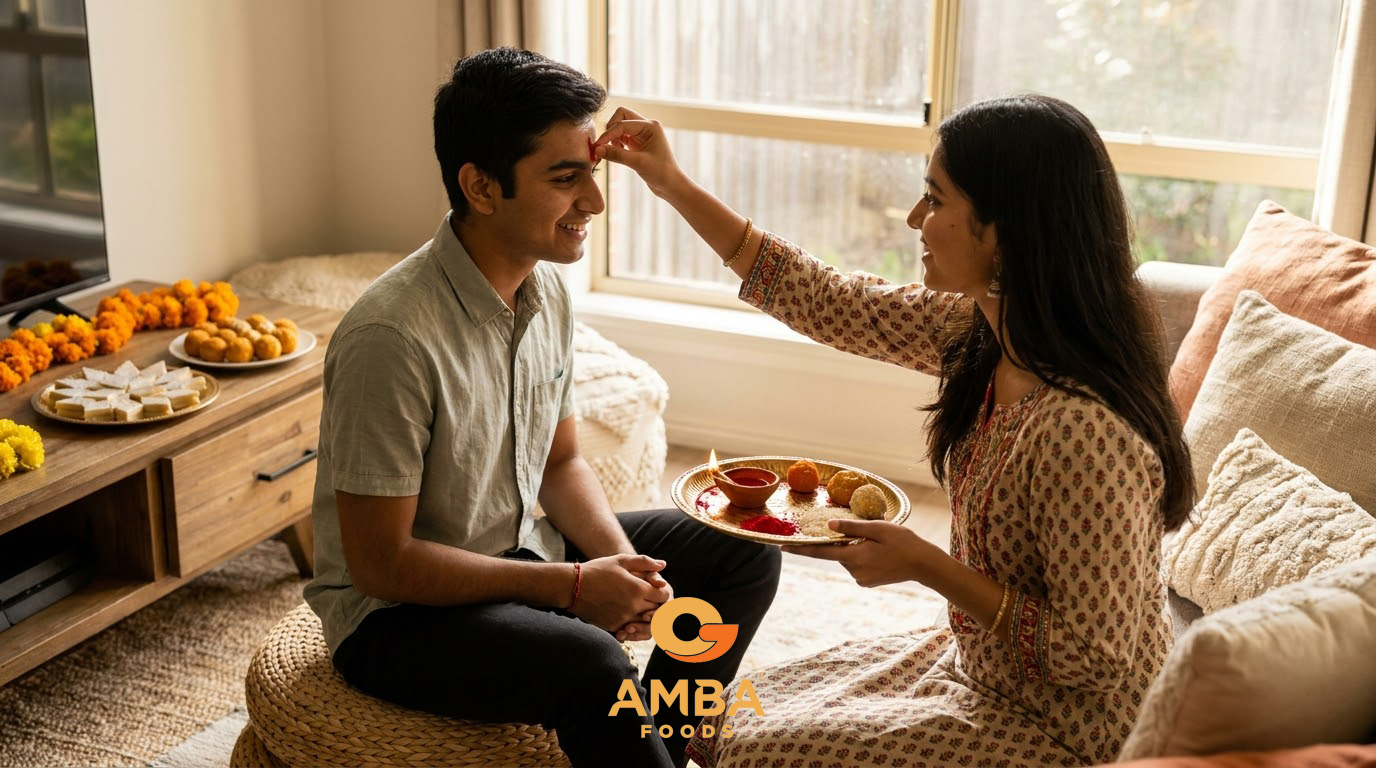
For Bengali households the day runs differently. After the idol is taken for immersion, the custom is sinduranga, followed by the exchange of sweets and the greeting of elders.
Sandesh and rasgulla are what get fed and exchanged, alongside a great deal of cham cham and rasmalai. We have covered the chhena tradition in more detail in our guide to Bengali sweets.
Ladoo, everywhere
Whatever the regional tradition, motichoor ladoo turns up. It goes on the puja thali, it gets distributed after the Ravana burning, and it is what most people hand to guests.
Ladoo is also the standard sweet for the ayudha puja, the blessing of tools, instruments and vehicles that many families do on Vijayadashami.
If you are handing ladoo to guests or taking some to family, our Motichoor Ladoo Golden Window Box holds 12 motichoor ladoo and our Crimson Boondi Ladoo Box holds 12 boondi ladoo, both ready-boxed.
Sweets for the day
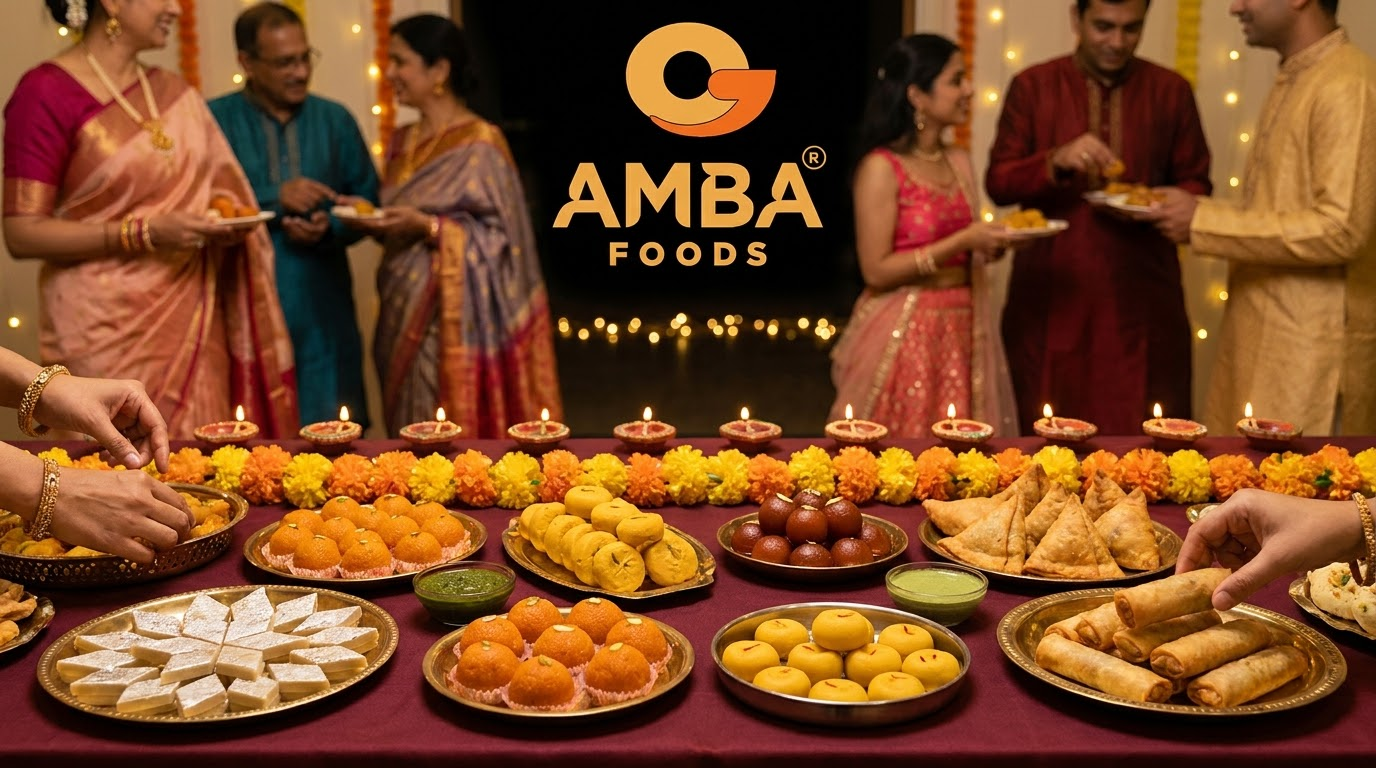
A reasonable Dussehra spread in an Australian home, without overcomplicating it:
For the puja thali. Motichoor ladoo and kesar peda. Small quantities, fresh, vegetarian.
For breaking the fast. Suji halwa made at home, or gajar halwa if you want something richer. Warm, gentle on a stomach coming off nine days of fruit and sabudana.
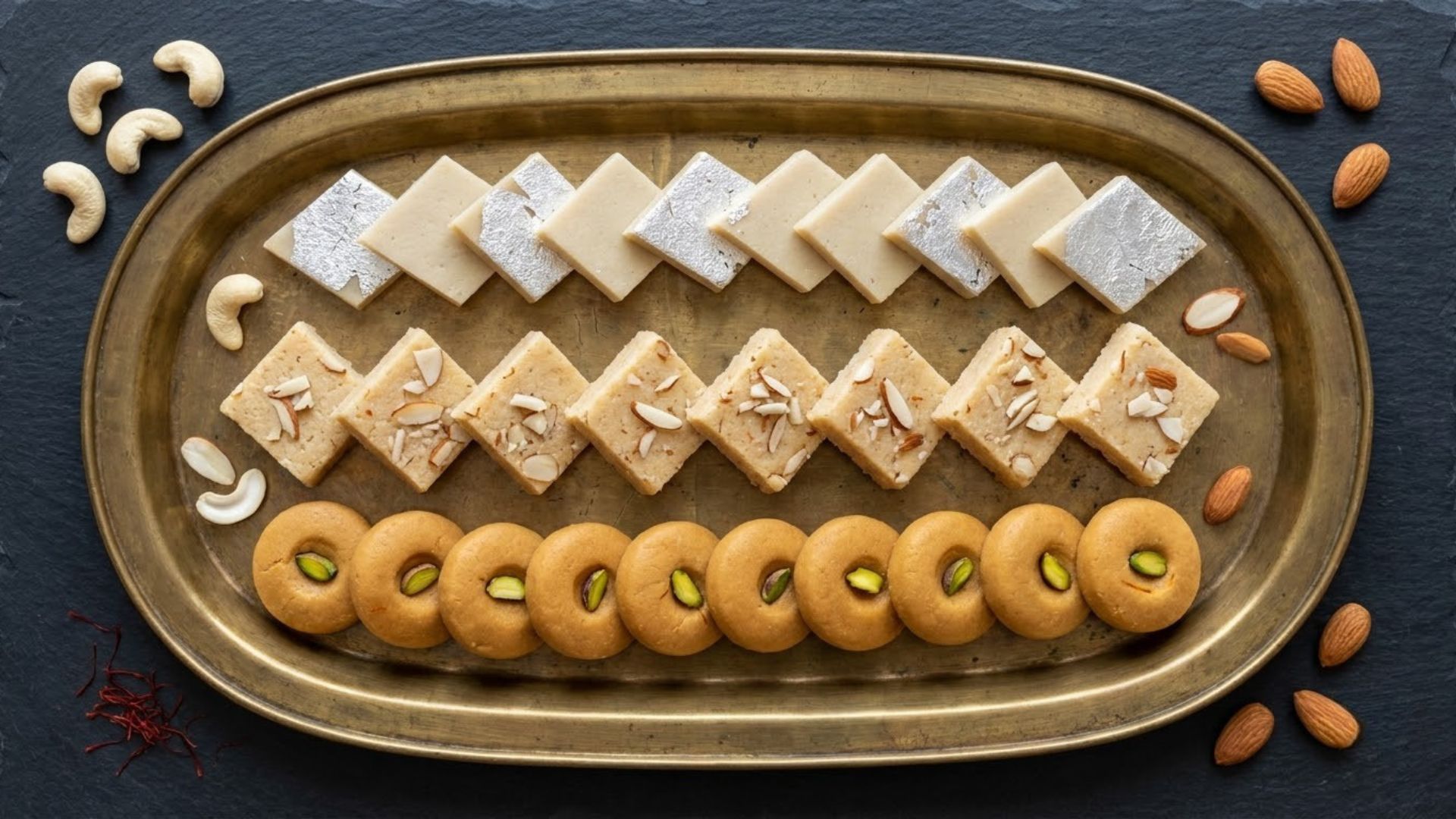
For guests. Kaju katli and kalakand. Cut and ready, no serving required.
For distributing after the effigy burning. Ladoo in quantity, because it portions without a knife and travels in a container.
For elders on Vijayadashami. Sandesh if you can find it, milk cake or peda if you cannot.
Our Range
Browse Our Full Product Range
750+ authentic Indian food products — sweets, snacks, ready-to-heat meals and more. Available at Indian grocery stores across Australia.
View All ProductsCelebrating Dussehra in Australia
Some practical differences.
Ramlila and effigy burning happen, at scale. Melbourne, Sydney, Perth and Brisbane all run community Dussehra events with Ravana effigies, usually at a sports ground or community reserve, organised by Hindu associations. These are the largest single-day Indian community gatherings in most Australian cities outside Diwali.
Check fire permits and dates. Community events do not always land exactly on 20 October, since organisers work around weekends, council approvals and fire restrictions. The event near you may run on the preceding or following weekend.
Durga Puja pandals run separately. Bengali associations in Melbourne and Sydney run their own multi-day pandals with their own bhog arrangements. If you are Bengali and new to the city, these are worth finding early; the community food operation is a significant part of the event.
October is not October. Dussehra in India arrives as the heat breaks. In Australia it arrives in spring, warming up. That matters for fresh sweets in transit more than people expect, and it is worth reading our storage guide if you are carrying a box across town to an event.
Order early. Dussehra sits directly between the Navratri and Diwali rushes. Sweet shops are already under pressure by mid-October, and jalebi in particular is made to order rather than held in stock.
Dussehra into Diwali
Nineteen days separate Dussehra on 20 October from Diwali on 8 November 2026, and traditionally the gap is preparation time. Houses are cleaned, purchases made, and Dhanteras on 6 November opens the Diwali run.
For households, the practical read is that Dussehra is the moment to place Diwali sweet orders. By the last week of October most sweet shops in Australia have closed their custom order books. Our complete Diwali sweets guide covers what to order and when, and our guide to the best Diwali gift boxes in Melbourne covers ready-made gift boxes for family and friends.
Frequently asked questions
When is Dussehra in 2026? Dussehra falls on Tuesday 20 October 2026, the day after Navratri concludes. It is also called Vijayadashami.
What food is eaten on Dussehra? Jalebi is the most widely associated sweet, with fafda alongside it in Gujarat. North Indian households often serve puri, kala chana and suji halwa from the Kanya Pujan meal, and many return to meat dishes after nine vegetarian days. Ladoo appears almost everywhere.
Why is jalebi eaten on Dussehra? Jalebi is associated with celebration and with breaking a fast, since it is sweet, fried and eaten warm. In several North Indian traditions it is also linked to Rama, and it is the standard sweet distributed after the Ravana effigy is burned.
What is the difference between Dussehra and Vijayadashami? They are the same day. Dussehra generally refers to the North Indian observance marking Rama’s victory over Ravana. Vijayadashami is the name used in Bengal, Odisha, Assam and much of South India, marking Durga’s victory over Mahishasura and the end of Durga Puja.
How do you break the Navratri fast? Gradually. Most households start with the Kanya Pujan meal of puri, kala chana and suji halwa on Ashtami or Navami, then return to normal food. Going straight from nine days of fruit and sabudana to a heavy fried meal is a common mistake.
Is Dussehra celebrated in Australia? Yes, widely. Melbourne, Sydney, Perth and Brisbane all hold community Dussehra events with Ravana effigies, and Bengali associations run Durga Puja pandals through the preceding days. Dates sometimes shift to the nearest weekend.
How long between Dussehra and Diwali 2026? Nineteen days. Dussehra falls on 20 October and Diwali on 8 November 2026, with Dhanteras opening the Diwali festival on 6 November.
Ordering
We make fresh mithai in Melbourne and supply grocery stores, restaurants, caterers and community event organisers across Australia. Dussehra and Diwali orders are best placed well ahead of the date.
Wholesale Supply
Stock Amba Foods Products in Your Store
Wholesale supply for retailers, restaurants and caterers across Australia. Competitive pricing, reliable delivery.
Wholesale EnquiryGet in Touch
Have Questions? We're Here.
Call us on 1300 790 350 or send us a message — our team responds within 1 business day.
Contact Us