










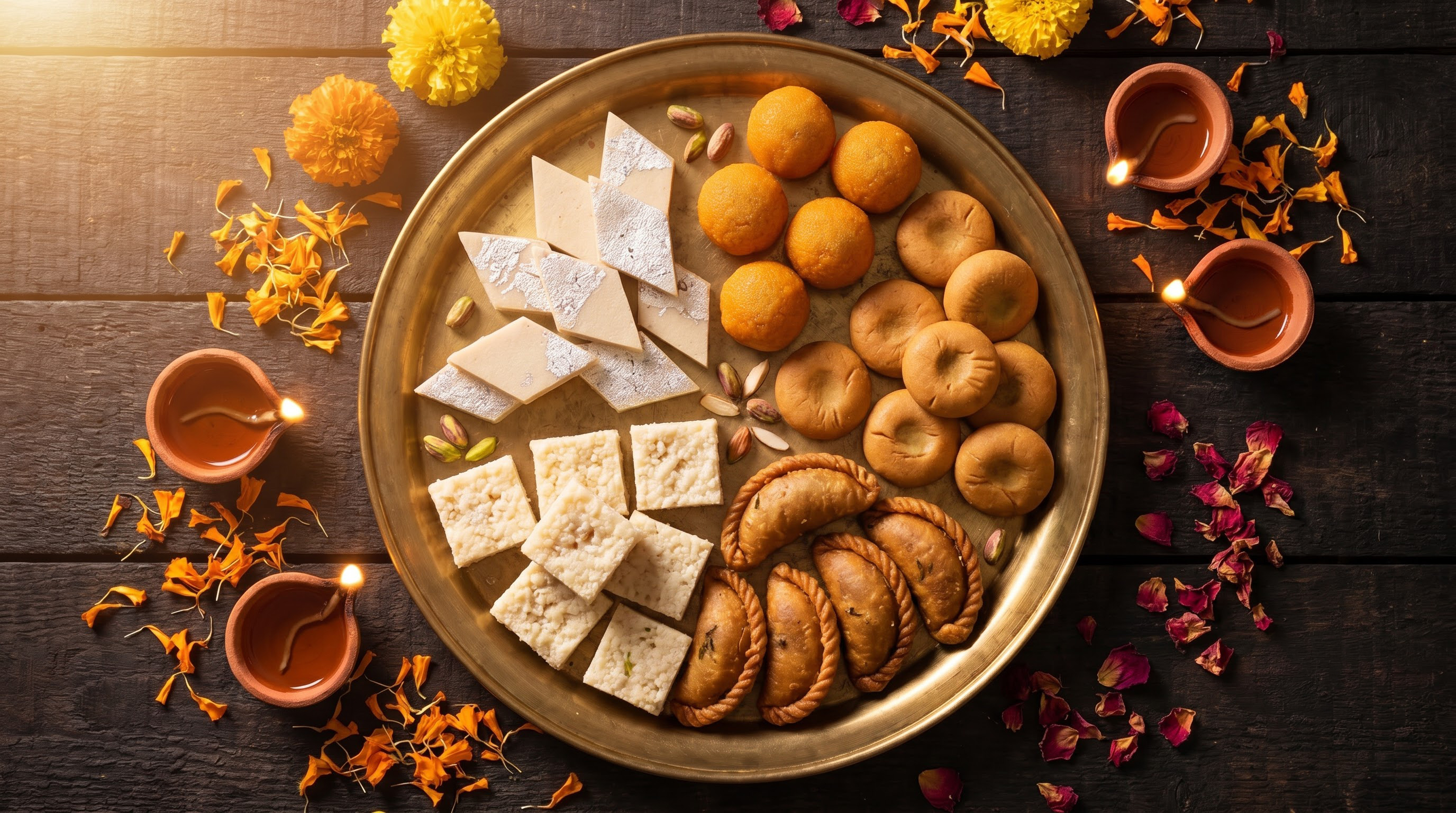
Diwali 2026 falls on Sunday 8 November, with the five days running from the 6th to the 10th. In the fortnight before that, Indian sweet shops across Melbourne, Sydney and Perth will do somewhere between a quarter and a third of their annual volume.
Which is why the person who walks in on 6 November asking for four kilos of kaju katli usually walks out with something else.
This guide covers what each sweet actually is, which ones travel and keep, what to buy for whom, and when to place the order. It is long because Diwali sweet buying has more moving parts than people expect, and the mistakes are mostly avoidable.
Why sweets sit at the centre of Diwali
Mithai does three separate jobs across the five days, and they have different requirements.
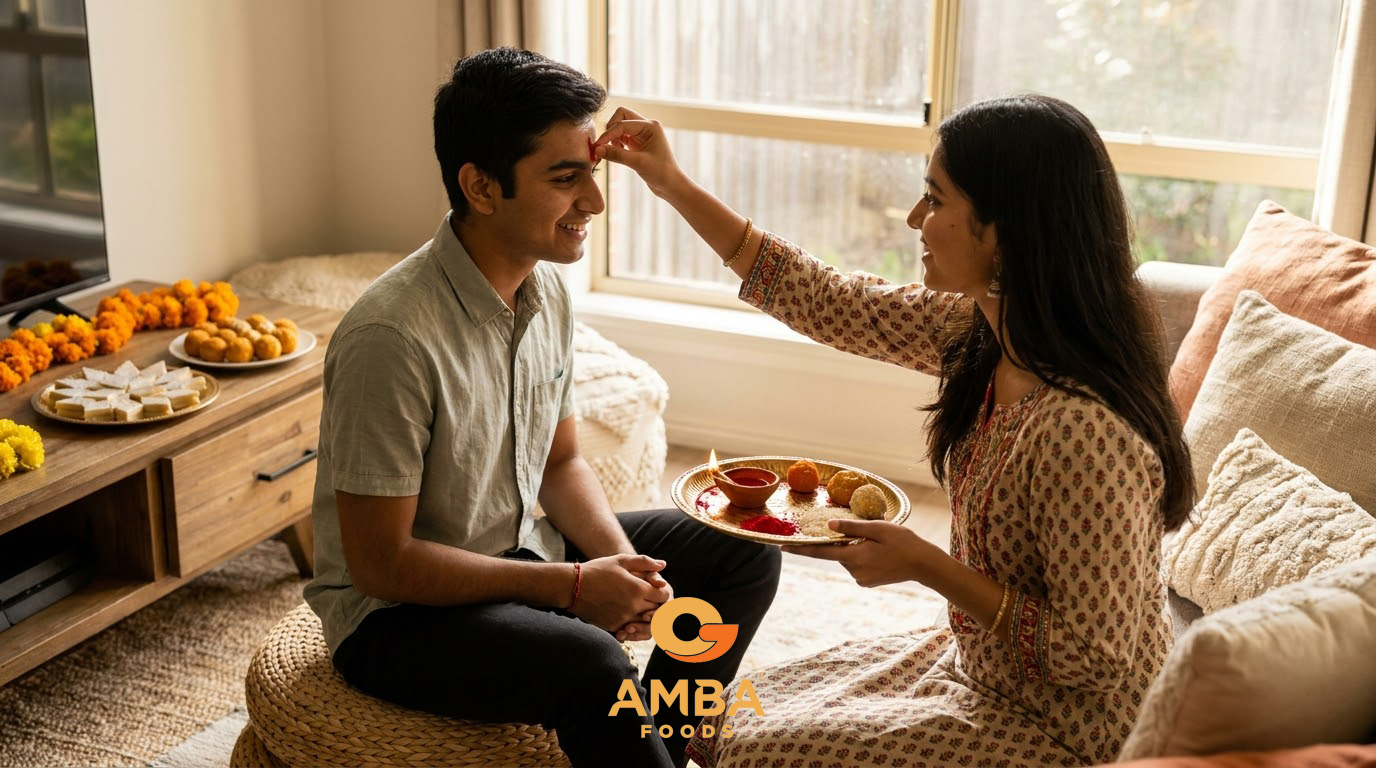
There is the offering. Sweets go on the puja thali for Lakshmi Puja on the main night, and what matters there is that they are fresh, vegetarian, and made without egg. Quantity is small.
There is the gifting. Boxes go to family, neighbours, colleagues and the people who have done something for you that year. This is the bulk of what gets bought, and the requirements are shelf life and presentation rather than peak freshness.
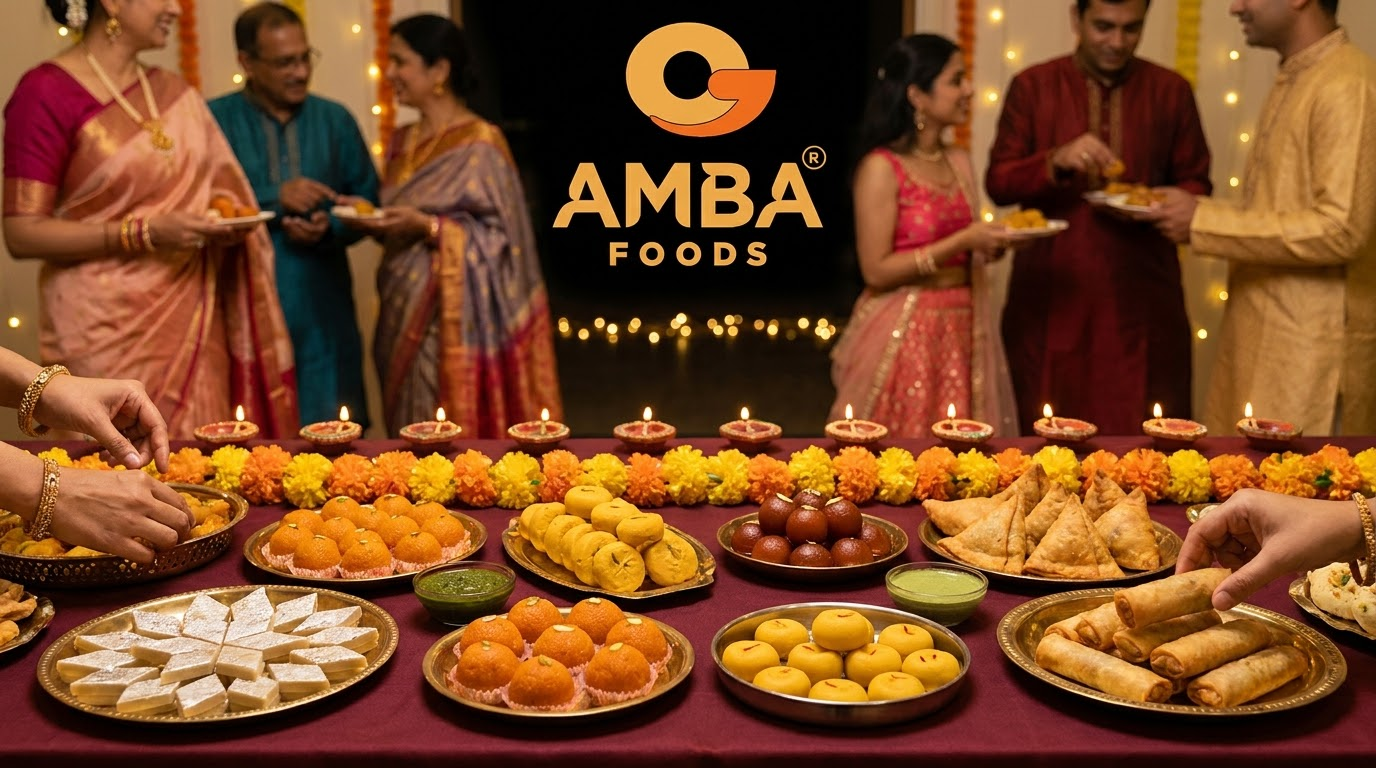
There is the hosting. People drop in across five days, often without warning, and something needs to be on the table. Volume matters more than refinement.
Buying for all three as if they were one thing is the most common mistake, and it usually shows up as either too much of something delicate that goes off, or a gift box that looks like it was assembled in a hurry.
The sweets, category by category
Katli and barfi
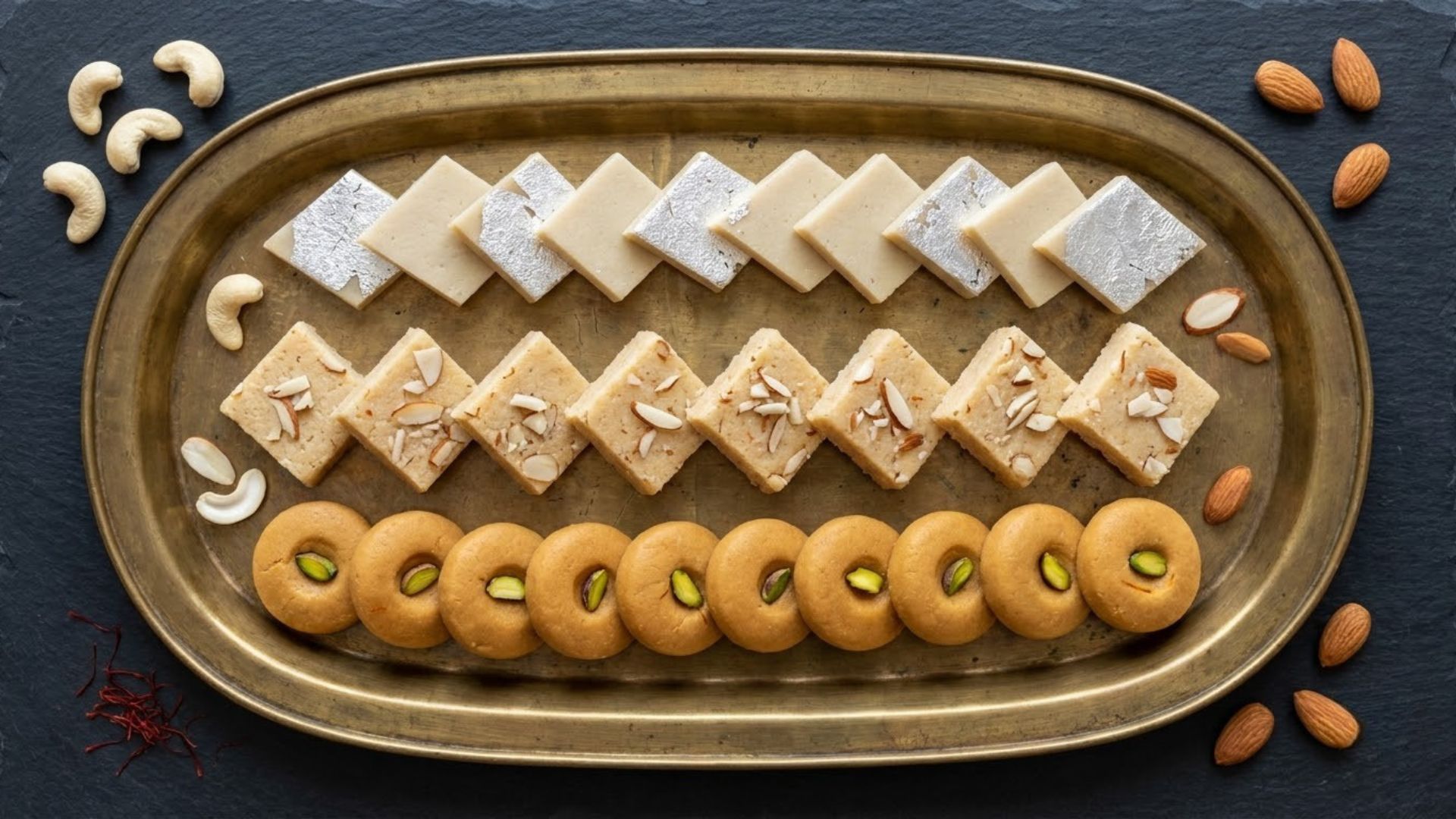
Thin, dense, cut into diamonds. The katli family is what most people picture when they think of Diwali sweets, and it is the safest gifting choice by a wide margin.
Kaju katli is cashew, sugar and not much else, rolled thin and usually finished with edible silver varak. It keeps well at room temperature for around a week, longer refrigerated, and it survives being carried around in a car boot on a warm November afternoon, which matters more than people admit.
Kaju kesar katli is the same base with saffron worked through it. The colour shifts to pale gold and the flavour picks up something floral. Slightly more expensive, and worth it when the box is going to someone you want to impress.
Almond barfi swaps cashew for almond. Denser, nuttier, a little less sweet. Some households prefer it outright, and it is a useful second option when you are sending multiple boxes to the same extended family and want them to differ.
A mild opinion, since this guide is not a catalogue: kaju katli is over-indexed. It is genuinely good and it is also the default because nobody gets criticised for sending it. A box with kalakand and milk cake in it takes slightly more thought and lands better with anyone who eats mithai regularly.
Ladoo
Round, golden, made from besan or boondi bound with sugar syrup and ghee.
Motichoor ladoo is made from tiny fried besan pearls, so fine that the finished ladoo almost dissolves. It is the most widely bought sweet in the country during Diwali week, partly because it works for every one of the three jobs above. Puja thali, gift box, or a plate for visitors. For gifting, our Golden Ladoo Window Box holds 12 of them, ready to hand over.
Ladoo also portions without a knife, which sounds trivial until you are serving fourteen people who arrived at once.
Peda
Small discs of thickened milk, pressed and often marked with a thumbprint or a pistachio.
Kesar peda carries saffron and cardamom. Mathura peda is darker, cooked longer, with a caramelised edge to the flavour that comes from the khoya being taken further.
Peda has the best shelf life of any fresh milk sweet, roughly five to seven days unrefrigerated in mild weather. If you are posting a box interstate, peda is the one that arrives in the condition it left.
Milk sweets
Kalakand is grainy, moist, barely sweet compared with everything else on this list. Made from milk curdled at exactly the right point and then cooked down, the texture is the whole appeal and it does not survive being made in advance.
Milk cake danedar takes that graining further on purpose. Cooked longer, so the centre goes darker and fudgier than the edges. Very good, quite rich, and a small piece goes a long way.
Both of these are short-life items. Buy them for the days you are actually eating them rather than for a box that sits on a shelf for a week.
Chhena sweets
The Bengali tradition, made from fresh curdled milk rather than reduced milk.
Punjabi rasgulla sits in light sugar syrup, spongy and meant to be squeezed slightly against the roof of your mouth. Cham cham is oblong, denser, often stuffed. Rasmalai is flattened chhena discs in thickened saffron milk, served cold.
These are the hardest to gift because they come in syrup and they need refrigeration. They are also the ones people are most pleased to receive, so they are worth the logistics if you are handing the box over in person.
Fried sweets
Gulab jamun needs no introduction. Khoya dumplings fried dark and soaked in cardamom syrup, served warm. Angoori gulab jamun is the same thing made grape-sized, which changes the experience more than the size suggests.
Gujia is a half-moon pastry stuffed with khoya and nuts, hand-crimped along the edge. Associated more with Holi in North India, but it appears at Diwali across plenty of households and it keeps for days.
Halwa and panjiri
Gajar halwa is grated carrot cooked down in milk and ghee until the whole thing goes deep orange. Served warm. In Australia the timing works in your favour, since November carrots are good and a warm halwa suits an evening that has not quite committed to summer.
Dry fruit panjiri is the outlier on this list. Coarse, nutty, barely sweet, traditionally eaten as an energy food. It keeps for weeks and it is the thing to send to a household with someone recovering from illness or a new mother.
What to buy for whom
Some rules of thumb that hold up in practice.
Sending to elderly relatives. Peda, kaju katli, and something less sweet like kalakand. Avoid heavy syrup sweets, which are harder going and messier to serve.
Colleagues and neighbours who may not eat mithai often. Kaju katli and motichoor ladoo. Both are familiar enough to be recognised and mild enough not to overwhelm someone whose baseline for sweetness is a Tim Tam.
Family who know their sweets. Mix it. Kalakand, milk cake, mathura peda, one chhena sweet if you are delivering in person. A box of four different things beats a box of one thing in quantity.
Children. Angoori gulab jamun and motichoor ladoo, for the practical reason that both come in small pieces and neither requires cutting.
Posting interstate. Peda, katli, barfi, gujia, panjiri. Nothing in syrup, nothing that needs refrigeration, and pack it so the varak does not smear against the lid.
Large gatherings. Motichoor ladoo in quantity, plus one or two others for variety. Ladoo scales in a way that cut sweets do not.
Gift boxes and combinations
Assembling a good box is a matter of balance rather than value. Four principles that work:
Vary the texture. A box of five dense milk sweets is monotonous by the third piece. Put something grainy next to something smooth next to something fried.
Vary the colour. Pale katli, orange ladoo, dark mathura peda, white kalakand. This is the difference between a box that photographs well and one that looks beige.
Respect the shortest shelf life in the box. A box containing kalakand has a three-day life regardless of what else is in it. Either accept that or leave the kalakand out.
Weight the premium item. One or two pieces of kaju kesar katli in a box of otherwise standard sweets reads as generous. Filling the whole box with it reads as thoughtless in a different direction.
If you would rather not assemble your own, our Diwali gift boxes range runs from the classic Gold Octagon Mithai Box and the Lavender Kaju Katli & Barfi Box to hampers like the Heritage Diwali Trunk. Our guide to the best Diwali gift boxes in Melbourne compares all 14.
Our Range
Browse Our Full Product Range
750+ authentic Indian food products — sweets, snacks, ready-to-heat meals and more. Available at Indian grocery stores across Australia.
View All ProductsShelf life, storage and the mistakes people make
Fresh mithai is dairy confectionery, and it behaves like dairy.
Rough guidance at Australian November temperatures:
| Sweet | Room temperature | Refrigerated |
|---|---|---|
| Peda | 5–7 days | 2 weeks |
| Kaju katli, barfi | 5–7 days | 2 weeks |
| Motichoor ladoo | 4–5 days | 10 days |
| Kalakand, milk cake | 2–3 days | 5–6 days |
| Gulab jamun (in syrup) | 3–4 days | 1 week |
| Rasgulla, rasmalai | Refrigerate only | 4–5 days |
| Gujia, panjiri | 2 weeks | 1 month |
Three things that ruin sweets faster than time does.
Condensation. Taking a box out of the fridge, opening it, and putting it back warm creates moisture on the surface. Katli goes tacky and the varak lifts. Let a box come to room temperature before opening it.
Mixed storage. Syrup sweets and dry sweets in the same container means the dry ones absorb moisture. Keep them separate even inside a larger box.
Sunlight. A box left on a car dashboard in Melbourne in November is a lost box. This is a more common failure than it sounds, particularly on the drive between three houses on the main night.
When to order
The single most useful thing in this guide.
Six to eight weeks out (mid-September). Corporate and bulk orders. If you are ordering hampers for staff or clients, this is the window where you get exactly what you specified.
Three to four weeks out (mid-October). Large family orders, custom boxes, anything with a specific combination. Sweet shops start committing production capacity around this point.
Ten to fourteen days out (late October). Standard gift box orders. Still comfortable, still full range available.
Five to seven days out. Getting tight. Popular items start selling out, and substitutions begin.
Two to three days out. You will get sweets. You will not necessarily get the ones you asked for, and premium lines like kaju kesar katli are usually gone.
Diwali week itself. Whatever is left.
Fresh sweets are made to order in a way that packaged goods are not, so a sweet shop cannot simply pull more kaju katli off a shelf. Somebody has to make it, the day before, starting early.
Buying in Australia
A few things specific to doing this here.
Fresh mithai made locally is a different product from imported boxed sweets. The distance between the kitchen and the customer is the main variable in how good it tastes, which is the whole argument for buying from somewhere that makes it in the same city. We have written about how fresh mithai is made in Melbourne if you want the detail.
Check whether what you are buying is made fresh or shipped in. Both have their place, and a shipped box of katli is perfectly good for a colleague who will eat two pieces. For the puja thali and for family, fresh is worth the extra effort.
Order deadlines are real. Most Melbourne sweet shops close their custom order books somewhere around ten days out, and after that you are buying what is in the case.
November is warm. Plan the collection and delivery around that rather than assuming it will be fine.
Frequently asked questions
When is Diwali in 2026? Diwali falls on Sunday 8 November 2026. The five-day festival runs from Dhanteras on 6 November through to Bhai Dooj on 10 November, with Lakshmi Puja on the main night of the 8th.
How far in advance should I order Diwali sweets in Australia? Two weeks for a standard gift box, three to four weeks for a large or custom order, and six to eight weeks for corporate hampers. Ordering in Diwali week itself means taking whatever is still available.
Which Indian sweets last the longest? Gujia and dry fruit panjiri keep for weeks. Among fresh milk sweets, peda and the katli family last five to seven days at room temperature. Kalakand and milk cake are the shortest at two to three days.
Which sweets can I post interstate? Peda, kaju katli, almond barfi, gujia and panjiri all travel well. Avoid anything in syrup, including rasgulla, rasmalai and gulab jamun, and avoid short-life milk sweets like kalakand.
What should go on the Diwali puja thali? Something fresh, vegetarian and egg-free. Motichoor ladoo and peda are the most common choices, usually alongside fruit, dry fruit and a diya. Quantities are small since the offering is symbolic.
Are Indian sweets vegetarian? Almost all traditional mithai is vegetarian, made from milk, sugar, ghee, flour and nuts. Check individual products if you need confirmation, and note that most contain dairy so they are not vegan by default.
How many sweets do I need per person? For a gathering, roughly 100 to 150 grams per guest across the evening. For a gift box, 500 grams suits a couple or small household and one kilogram suits a larger family.
Do Indian sweets need refrigeration? Chhena sweets like rasgulla and rasmalai always do. Milk sweets like kalakand and milk cake should be refrigerated in Australian November weather. Katli, barfi, peda and ladoo are fine at room temperature for several days if kept out of direct sun.
Ordering from Amba Foods
We make fresh mithai in Melbourne and supply grocery stores, restaurants, caterers and event businesses across Australia. Retail customers can find our sweets at Indian grocery stores nationally.
For Diwali 2026, the ordering windows above apply to us as much as anyone. Bulk and corporate enquiries are best placed through September.
Wholesale Supply
Stock Amba Foods Products in Your Store
Wholesale supply for retailers, restaurants and caterers across Australia. Competitive pricing, reliable delivery.
Wholesale EnquiryGet in Touch
Have Questions? We're Here.
Call us on 1300 790 350 or send us a message — our team responds within 1 business day.
Contact Us