










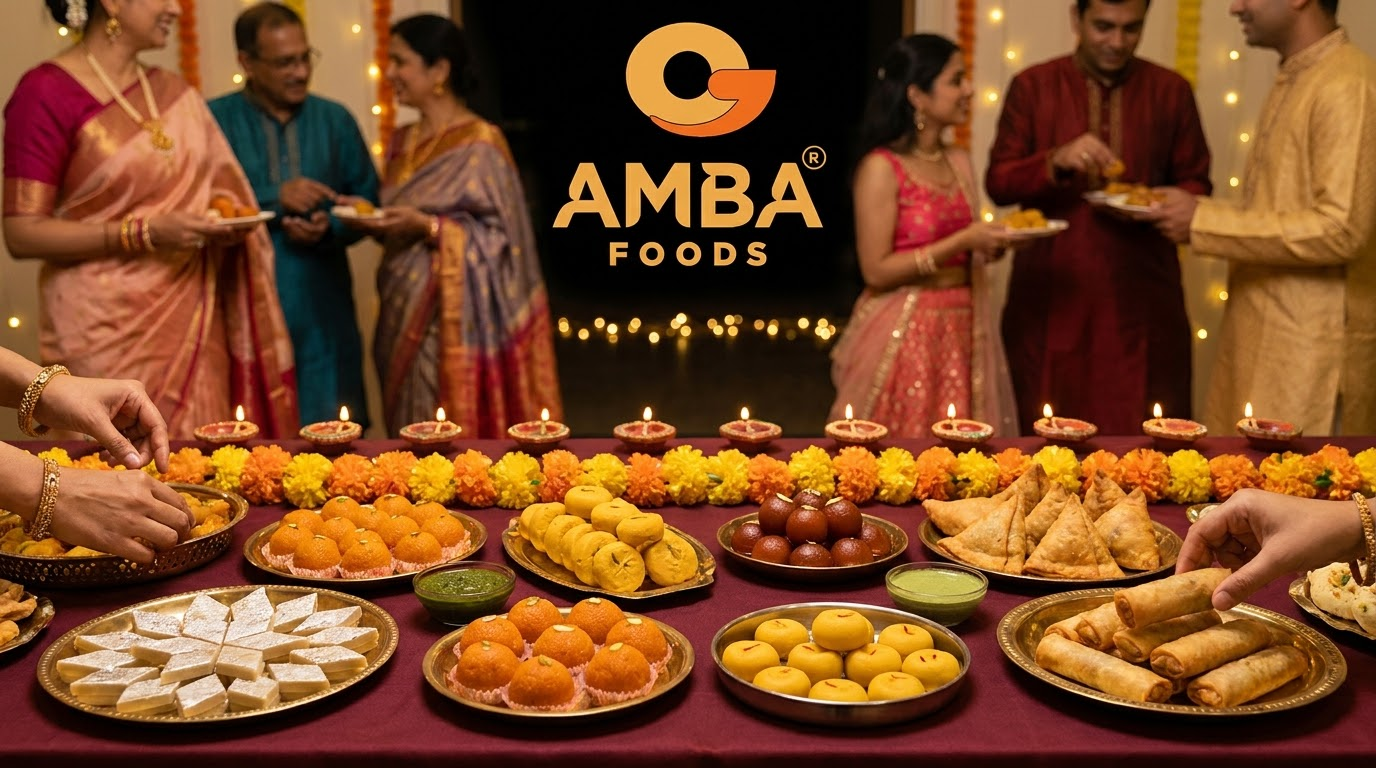
Diwali falls on Sunday 8 November this year, and that date quietly reshapes every celebration around it. Offices will mark it on Thursday 5 or Friday 6 November. Families will host across the weekend. Temples and community groups usually run their big events on the Saturday, or push them to the following weekend when halls are easier to book.
Every one of those events needs food. And the food tends to go wrong in the same handful of ways: too many sweets, not enough savoury, nothing on the table for the colleague who avoids onion and garlic, and an order placed four days out when every kitchen in Melbourne is already at capacity.
This guide covers how much to order, what to serve, and when to book, whether you are feeding 20 people in your lounge room or 300 in a community hall.
Start with the kind of event
The menu follows the event, so it helps to be clear about which one you are running.
A house party, 15 to 40 guests
The most common Diwali gathering, and the one where food does the most work. Guests arrive after puja, stay for hours, and graze the whole time. Plan for a proper meal plus sweets, with snacks coming out in waves rather than all at once.
Hosts usually cook one or two dishes themselves and buy the rest. The sensible split is to make whatever your family is known for, and buy the things that are fiddly in bulk: samosas, sweets, and anything fried.
An office celebration, 20 to 150 people
Usually a two-hour afternoon slot, often on a Friday. People eat standing up, many will be trying Indian food for the first time, and a good share of the sweets gets taken home to families.
Finger food wins here. Anything that needs a plate, a knife or a sauce you can spill on a work shirt gets left behind. Cocktail samosas, spring rolls, tikki and bite-sized mithai are the backbone of a good office Diwali spread.
Temple and community events, 100 guests and up
Volume, logistics and dietary range become the main problems. You may be serving several hundred people across a whole evening, with volunteers plating food and a queue that never quite stops.
Keep the menu short and the quantities generous. Three savoury items and three sweets, repeated across several trays, will serve a crowd better than ten items that run out one by one.
Client and corporate events
Smaller numbers, higher stakes. The food is part of how your business presents itself, so presentation and variety matter more than volume. Premium sweets like kaju katli and almond barfi sit comfortably next to a small, well-plated savoury selection.
How much food per guest
These are starting points for an evening event where the food is the main meal. For a short office afternoon, roughly halve the savoury quantities and keep the sweets about the same, because sweets are what people take home.
| Item | Per guest | Notes |
|---|---|---|
| Mithai (mixed) | 100–150 g | About 3 to 4 pieces across 3 or 4 varieties |
| Full-size samosa | 1–2 | Filling, so fewer is fine alongside a main |
| Cocktail samosa | 3–4 | Best for standing, finger-food events |
| Aloo tikki | 2 | Serve with chutney on the side |
| Spring rolls | 2–3 | Popular with guests new to Indian food |
| Momos | 4–6 | Steamed or crunchy, with chutney |
| Chole (as a main) | 150–200 g | With bread or rice |
| Rumali roti | 2–3 | Allow extra if chole is the only main |
| Bhel or chaat | 60–80 g | As a starter or live station |
A view you will not hear from every sweet maker: most Diwali events over-order sweets and under-order savoury. Guests eat two pieces of mithai, then go looking for a samosa. If your budget is fixed, take the money from a fourth sweet and put it into more savoury.
Building the menu
Sweets: three or four, chosen for contrast
Variety matters more than quantity. Pick sweets that differ in texture and colour so the tray looks generous and every guest finds something they like.
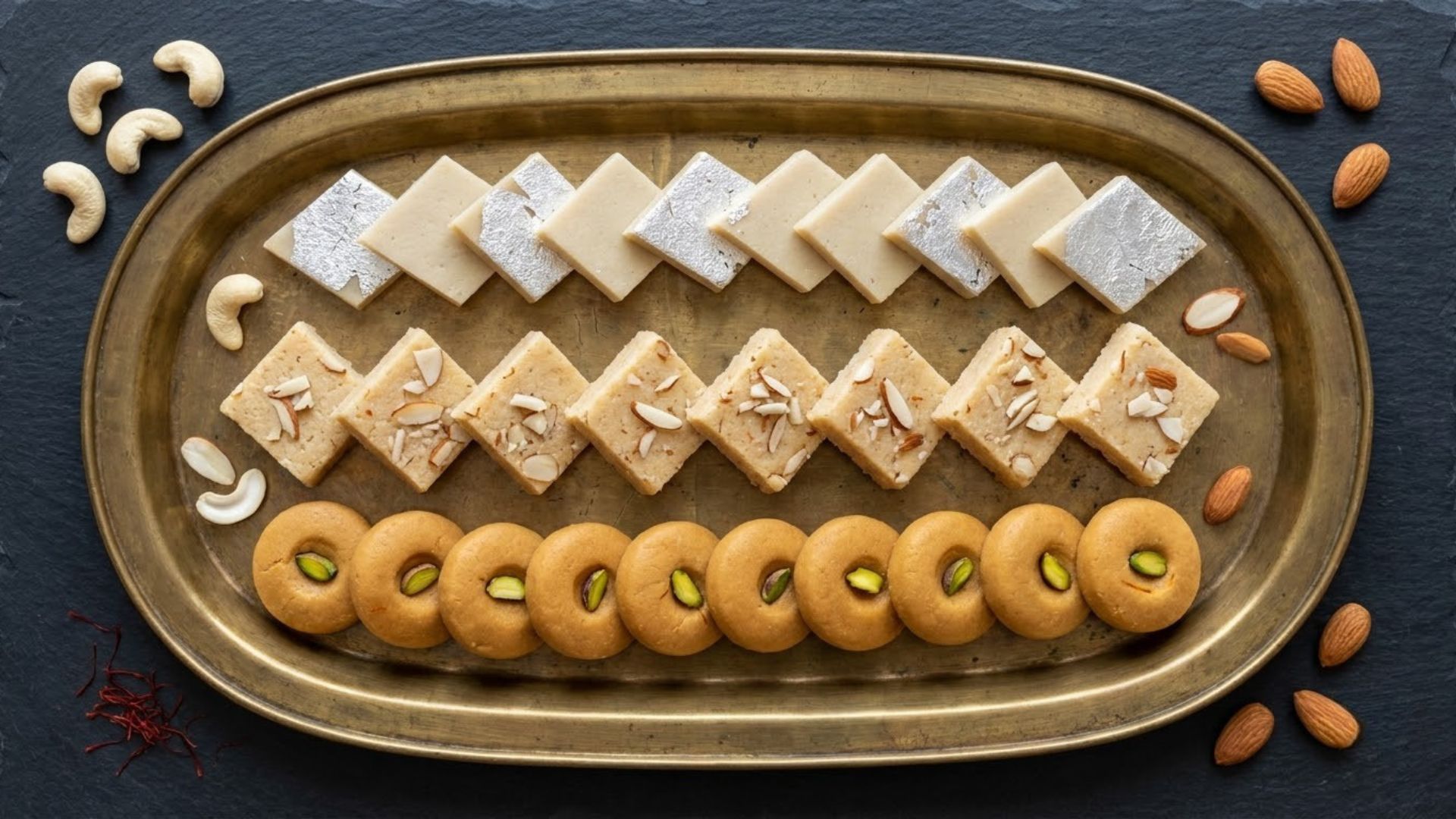
A reliable set for most events is motichoor ladoo for colour and familiarity, kaju katli as the premium piece, and kesar peda or kalakand for something milky and soft.
For a sit-down dinner, add one sweet served at a set temperature. Warm gulab jamun or gajar halwa suits a cool November evening, while chilled rasmalai works on a warm one. For a standing crowd, angoori gulab jamun comes in bite-sized pieces that do not need cutting.
Our complete Diwali sweets guide goes through every major variety if you want to go further.
Savoury snacks
Samosas are close to compulsory. The Punjabi samosa is the classic for a seated meal, while the cocktail samosa is the better choice for a standing office or community crowd. For large events, the XL jumbo samosa stretches a budget further.
Round the savoury table out with aloo tikki and veg spring rolls. Spring rolls in particular go fast at mixed workplaces, where they are the first thing many non-Indian colleagues reach for.
Momos are now a fixture at Diwali parties, especially with younger guests. Classic vegetable momos steam or pan-fry straight from frozen, and Schezwan momos come in a 40-piece family pack that suits a crowd. For a second samosa with a different filling, the paneer tikka samosa is a good choice.
For a house party where you want a bit of everything without buying several packs, our 5 Star Platter brings together 48 pieces of popular Indian snacks such as samosas and kachori.
Something substantial
If the event runs over a mealtime, guests need something more than snacks. Pindi chole with rumali roti is filling, vegetarian, holds well in a bain-marie, and feeds a crowd without much effort. Pav bhaji is a crowd-pleaser for a more casual evening.
A chaat station
For a community event or a larger house party, a chaat station gives people something to queue for and talk about. Bhel mix, panipuri and papdi chaat need only a couple of volunteers to assemble, and they keep a crowd busy while the main food comes out.
Dietary requirements
Diwali food is overwhelmingly vegetarian, which makes catering easier than most celebrations. There are still a few groups to plan for.
Jain guests avoid onion, garlic and root vegetables, including potato. That rules out most samosas and aloo tikki. Many plain milk sweets are suitable, but check the ingredients with your supplier before assuming.
Vegan guests will find most traditional mithai off limits, since it is built on milk, khoya, paneer and ghee. Plan a separate plate of fruit or dry fruit and nuts.
Nut allergies need real care. Kaju katli and almond barfi are made from nuts, many other sweets are garnished with pistachio or almond, and sweet kitchens handle nuts every day. Tell guests plainly, and do not describe any Indian sweet as nut-free unless the supplier confirms it.
Gluten appears in samosa pastry, spring roll wrappers and breads. Besan-based sweets use chickpea flour, but cross-contact is common in shared kitchens, so check before promising anything.
The simplest habit for any event: label every tray with the item name and its main allergens. It saves volunteers from answering the same question two hundred times.
When to order
Diwali is one of the busiest weeks of the year for every Indian food business in Melbourne. Working back from your event date:
| Event | Order by |
|---|---|
| Community or corporate event, 100+ guests | 3 to 4 weeks ahead, by mid-October |
| Office celebration, 20 to 100 people | 2 to 3 weeks ahead |
| House party | 1 to 2 weeks ahead |
| Short-life sweets (kalakand, rasmalai, rasgulla) | Collect 1 to 2 days before the event |
With Diwali on a Sunday this year, office celebrations will cluster on Thursday 5 and Friday 6 November, which also happens to be Dhanteras. Expect that to be the tightest window of the whole season. If your workplace event falls in those two days, order earlier than you think you need to.
Logistics on the day
Fridge space. Chhena sweets such as rasmalai and rasgulla must stay chilled. Clear a shelf before the order arrives, and bring them out close to serving time.
Reheating. Samosas and spring rolls stay crisp in an oven. A microwave turns pastry soft. Follow the heating instructions on the pack, and heat in batches so the trays stay full without everything going cold at once.
Serving temperature. Gulab jamun is best warm, rasmalai cold, and katli and peda at room temperature. Put syrup sweets and dry sweets on separate trays so the dry ones do not soak up moisture.
Heat. A Melbourne November afternoon can be warm. Keep sweets out of direct sun, and never leave a box on a car dashboard between collection and the venue.
Leftovers. Have containers ready so guests can take sweets home. Our shelf life and storage guide covers how long each type keeps.
Community events selling food. If your temple or community group is selling food rather than serving it free, you need to register the stall with your council before the event. In Victoria, temporary food stalls now register through FoodTrader, which replaced Streatrader. Our guide to Diwali mela food stalls in Melbourne covers registration, stall menus and how much to order per 100 plates.
Our Range
Browse Our Full Product Range
750+ authentic Indian food products — sweets, snacks, ready-to-heat meals and more. Available at Indian grocery stores across Australia.
View All ProductsOrdering for your event from Amba Foods
We make fresh mithai in Melbourne and supply bulk sweets for Diwali house parties, offices, temples and community events.
Tell us your guest numbers and event date in a pre-order on our Diwali page, and we will come back with a quote, usually within one business day. No payment is needed to pre-order, and you can collect from us or have your order delivered across Melbourne.
Want guests, volunteers or staff to leave with something? Our Diwali gift boxes make a ready-made thank-you. The Motichoor Ladoo Golden Window Box and Crimson Boondi Ladoo Box are the simplest to give in numbers, and our guide to the best Diwali gift boxes in Melbourne helps you pick from the full range.
Savoury snacks can come on the same order. Samosas, momos, aloo tikki, spring rolls and chaat items are all part of our range, so mention them in your pre-order, or for larger events send an enquiry through our food services page, and we will confirm what we can supply for your date.
Grocers and caterers planning their own Diwali stock can find our week-by-week ordering guide in Dussehra to Diwali: a 19-day stocking guide.
Wholesale Supply
Stock Amba Foods Products in Your Store
Wholesale supply for retailers, restaurants and caterers across Australia. Competitive pricing, reliable delivery.
Wholesale EnquiryFrequently asked questions
When is Diwali in 2026? Diwali falls on Sunday 8 November 2026. The festival runs from Dhanteras on Friday 6 November to Bhai Dooj on Wednesday 11 November, so most office celebrations will be held on Thursday 5 or Friday 6 November.
How much food do I need per guest for a Diwali party? For an evening event where food is the main meal, plan on 100 to 150 grams of mixed sweets, one or two full-size samosas or three to four cocktail samosas, and around 150 to 200 grams of a main such as chole with two or three pieces of bread per guest. For a short afternoon event, halve the savoury quantities.
What food is served at Diwali? Indian sweets are central: kaju katli, motichoor ladoo, peda, kalakand, gulab jamun and rasmalai are among the most popular. Savoury favourites include samosas, momos, aloo tikki, spring rolls, chole with bread, pav bhaji, and chaat such as bhel, panipuri and papdi chaat. Most Diwali food is vegetarian.
What should I serve at an office Diwali celebration? Finger food that can be eaten standing up: cocktail samosas, momos, spring rolls, aloo tikki and bite-sized sweets such as motichoor ladoo, kaju katli and angoori gulab jamun. Label every tray with allergens, and allow extra sweets because many people take some home.
How far in advance should I order Diwali catering in Melbourne? Three to four weeks ahead for events over 100 guests, two to three weeks for office celebrations, and one to two weeks for house parties. The days around Dhanteras and Diwali are the busiest of the year, so earlier is safer.
Can I order samosas and momos in bulk for a Diwali event in Melbourne? Yes. Amba Foods supplies samosas, momos, aloo tikki, spring rolls and chaat items alongside its sweets, so savoury and sweet can come on one order. Mention them in your Diwali pre-order, or send an enquiry through our food services page for larger events.
Are Indian sweets suitable for guests with nut allergies? Often not. Kaju katli and almond barfi are made from nuts, many other sweets are garnished with nuts, and most sweet kitchens handle nuts daily. Ask your supplier about specific items and cross-contact before serving them to anyone with an allergy.
What can Jain guests eat at a Diwali party? Jain diets exclude onion, garlic and root vegetables such as potato, so most samosas and aloo tikki are unsuitable. Many plain milk sweets are acceptable, but confirm the ingredients with your supplier first.
Can I order Diwali sweets in bulk in Melbourne? Yes. Amba Foods supplies bulk mithai for Diwali parties, offices, temples and community events. Pre-order on our Diwali page with your guest numbers and date, and we will send a quote, usually within one business day, with collection or delivery across Melbourne.
Get in Touch
Have Questions? We're Here.
Call us on 1300 790 350 or send us a message — our team responds within 1 business day.
Contact Us