









Sharad Navratri begins on Sunday 11 October 2026 and runs for nine nights, ending on Monday 19 October. Dussehra follows on Tuesday 20 October, and Diwali arrives less than three weeks after that.
For a lot of Indian families in Australia, that makes October the longest food season of the year. Nine days of fasting, a weekend or two of garba, a Kanya Pujan meal, then straight into Diwali preparation.
This guide covers the food side of Navratri: what fits a vrat, what does not, and what to have ready for the nights when you are hosting.
How the Navratri fast works
There is no single set of rules. Some people fast all nine days, some only on the first and last, some on Ashtami alone. Some take one meal a day, some eat only fruit and milk, a few go without food entirely on certain days.
What most households share is the list of foods that are avoided during a vrat:
- Grains and flours from grains: wheat, rice, maida, suji
- Lentils and pulses, including besan (gram flour)
- Onion and garlic
- Regular table salt, replaced with sendha namak (rock salt)
And the foods that are usually allowed:
- Milk, curd, paneer, ghee and khoya
- Fruit, nuts, makhana and dry fruit
- Sabudana (sago), potato, sweet potato and arbi
- Kuttu (buckwheat), singhara (water chestnut) and rajgira (amaranth) flours
- Sugar, jaggery and honey
Your family’s own tradition always wins over any list. If you are cooking for elders or for a temple, ask before assuming.
Which sweets fit a vrat
Sweets are where vrat rules get confusing, because two sweets that look similar can be made from completely different bases.
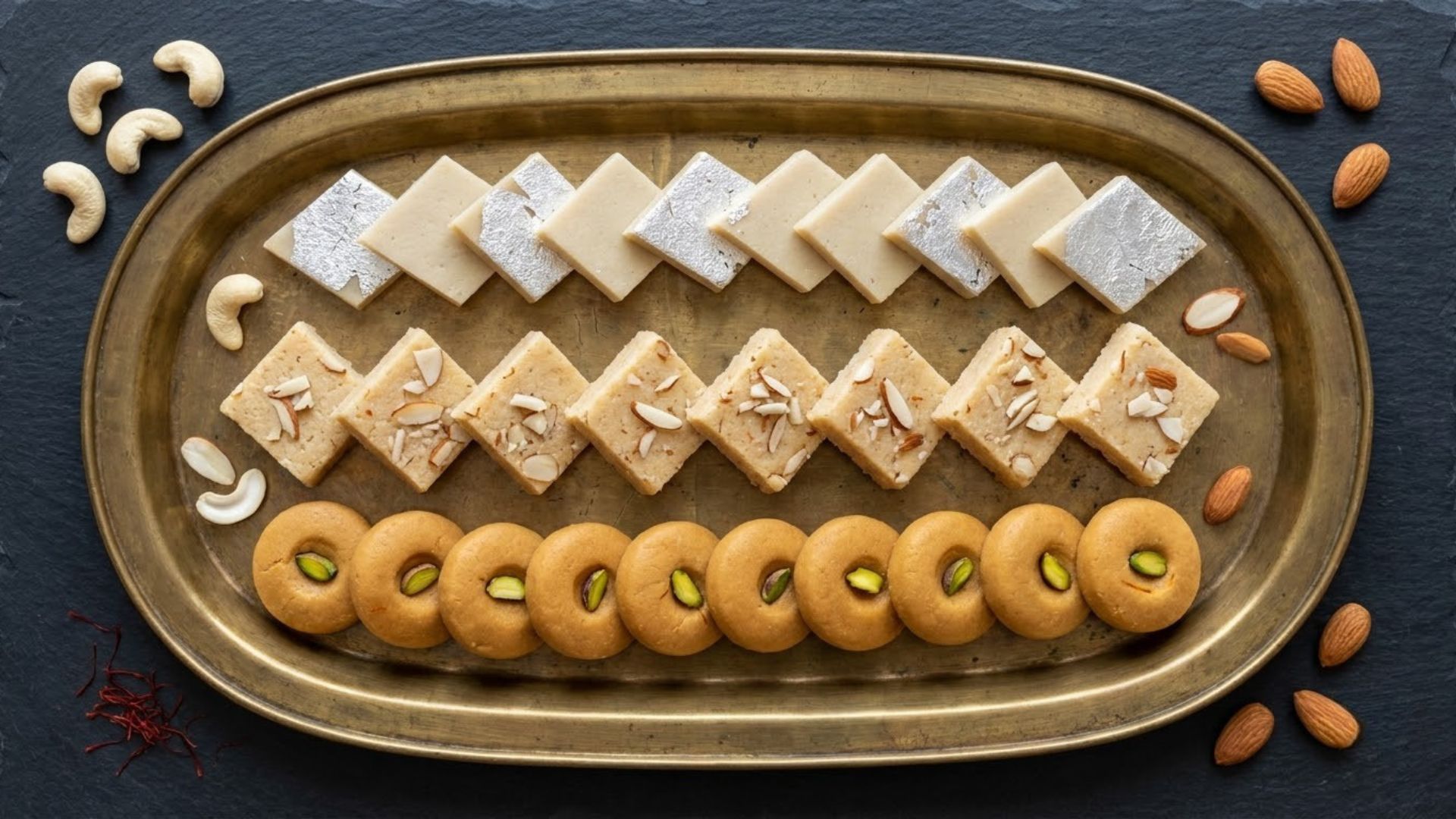
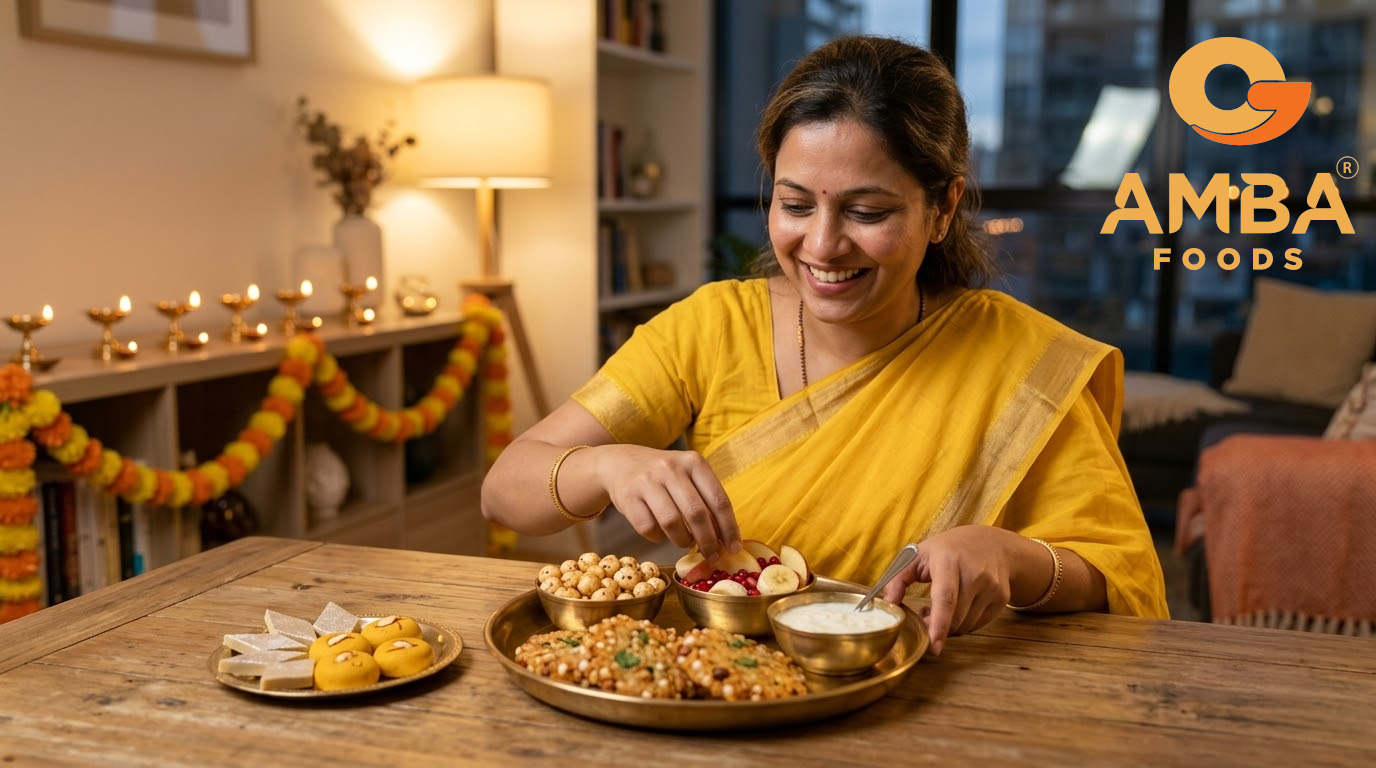
Usually suitable: sweets built only on milk, nuts, coconut and sugar. Traditional kaju katli is cashew and sugar. Peda, kalakand and milk cake are reduced milk and sugar. Coconut barfi, makhana kheer and sabudana kheer all sit comfortably inside most vrat rules.
Usually not suitable: anything made with besan, suji or maida. That takes out motichoor ladoo and boondi, which are besan-based, along with most gulab jamun, which typically uses a little maida in the dough, and suji halwa. Panjiri made with wheat flour is out too.
Check first: shop-bought sweets of any kind. A recipe that is traditionally just milk and sugar may include a binding flour, milk powder or a stabiliser in commercial production. The only way to know is to read the ingredient list or ask the maker.
Within our own range, kaju katli, kesar peda, kalakand and milk cake are the varieties families most often reach for during a fast. Check the ingredient list on each product page before serving, and ask us if anything is unclear. We would rather answer a question than have someone break a fast by accident.
Savoury vrat food
The savoury side of a fast is where most of the effort goes, and where a few ready options save a lot of time across nine days.
Sabudana tikki. Crisp sago and potato patties, the closest thing to a snack most fasting households get. Our sabudana tikki saves you making the mixture from scratch, which matters on a weeknight when you are fasting and still working a full day.
Sabudana khichdi. Soaked sago tossed with potato, peanuts, green chilli and rock salt. Easy to make in a large batch.
Kuttu or singhara puri. Buckwheat or water chestnut flour puris, usually eaten with a dry potato sabzi.
Makhana. Roasted in a little ghee with rock salt and pepper, it is the snack most people keep within reach all nine days.
Fruit chaat. Banana, apple, pomegranate and papaya with a squeeze of lemon and a pinch of rock salt.
Garba nights
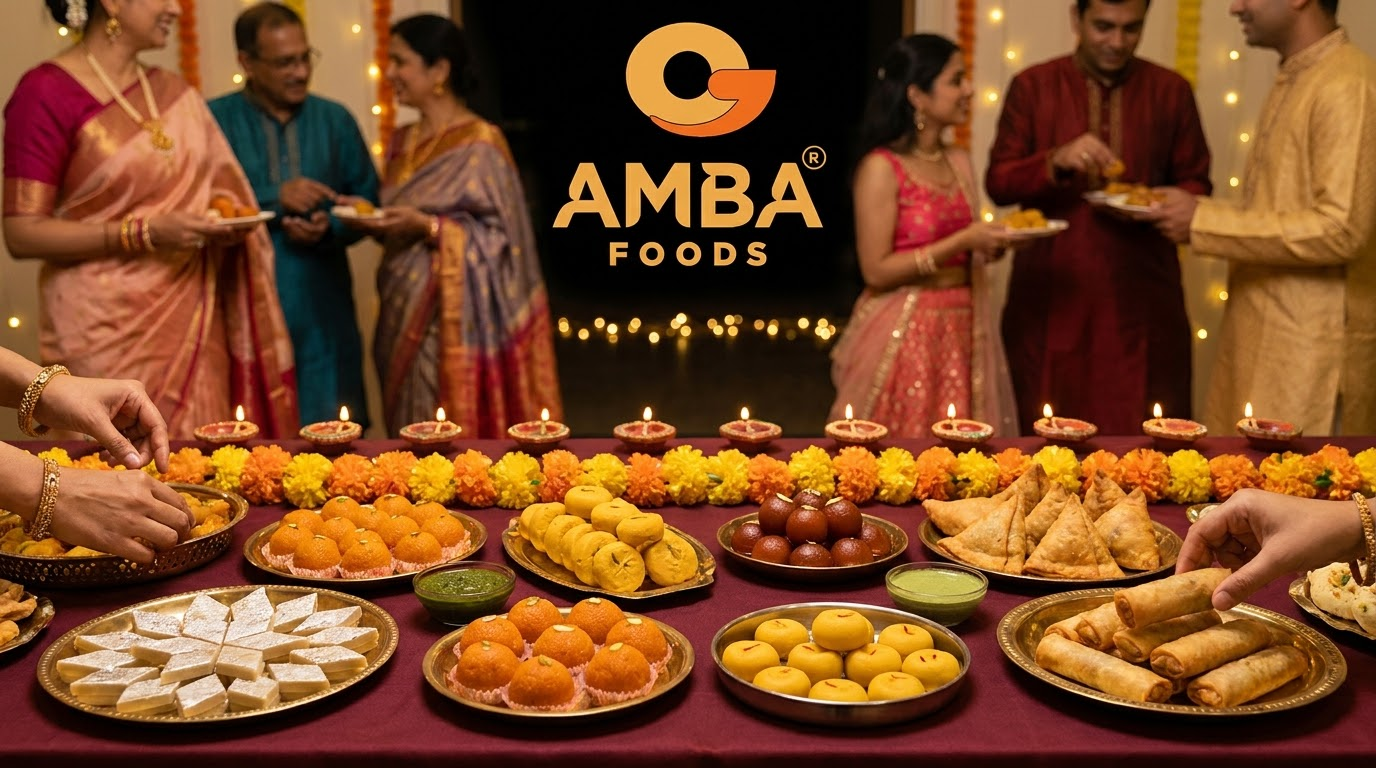
Not everyone at garba is fasting, and the food at most community garba nights in Melbourne reflects that. Hosts and organisers usually need two separate spreads: one vrat-friendly, one not.
For the non-fasting table, finger food works best, since people eat between dances. Cocktail samosas, spring rolls and bite-sized sweets keep a crowd going without plates. For the fasting table, sabudana tikki, roasted makhana, fruit and milk sweets.
Label the two tables clearly. People who are fasting should never have to ask whether something is safe to eat.
Kanya Pujan
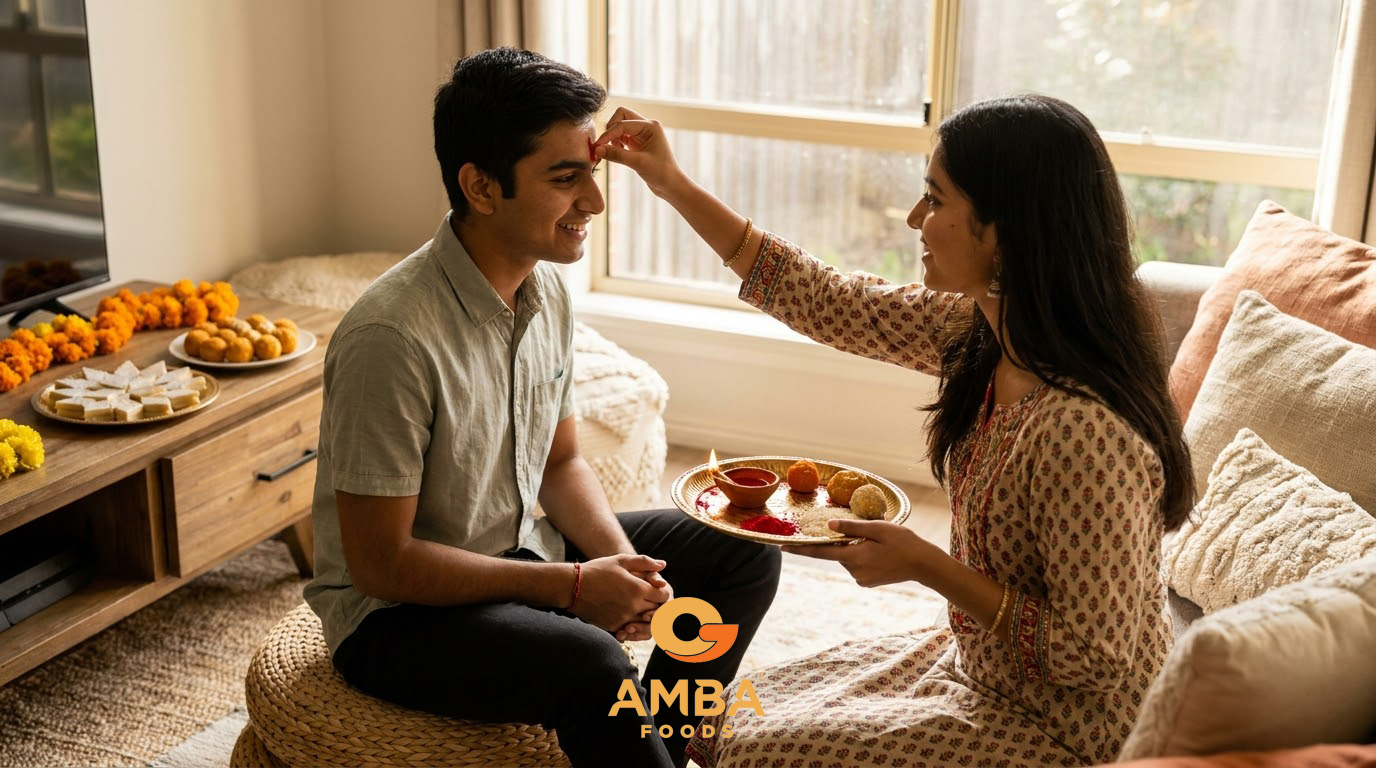
On Ashtami or Navami, the eighth or ninth day, many families perform Kanya Pujan. Young girls are invited home, their feet are washed, and they are served a set meal of puri, kala chana and suji halwa, along with a small gift.
The meal itself is grain-based, so it marks the end of the fast for many households rather than being part of it. The sweet is usually suji halwa made at home, but a box of mithai to send home with each girl is a common addition.
Ending the fast gently
After nine days of fruit, milk and sabudana, going straight to a heavy fried meal is a well-known mistake. Most families ease back with the Kanya Pujan meal, then return to normal food over a day or two.
That timing also puts Dussehra on Tuesday 20 October right at the point when appetites return. Our Dussehra food guide covers what families serve on the day.
Our Range
Browse Our Full Product Range
750+ authentic Indian food products — sweets, snacks, ready-to-heat meals and more. Available at Indian grocery stores across Australia.
View All ProductsPlanning ahead for Diwali
Navratri leads straight into the busiest weeks of the Indian sweet calendar. Diwali falls on Sunday 8 November 2026, and custom orders for gift boxes and large quantities close well before then.
If you know you will be ordering sweets for Diwali, the Navratri weeks are the quiet window to do it. Our Diwali sweets guide covers what to order and when, and our Diwali gift boxes are open for orders now.
Frequently asked questions
When is Navratri in 2026? Sharad Navratri 2026 begins on Sunday 11 October and ends on Monday 19 October, with Dussehra on Tuesday 20 October.
What can you eat during a Navratri fast? Most vrat traditions allow milk, curd, paneer, ghee, fruit, nuts, makhana, sabudana, potato, sweet potato, and kuttu, singhara or rajgira flour, with sendha namak in place of regular salt. Grains, pulses, besan, onion and garlic are usually avoided. Family traditions vary, so follow your own.
Which Indian sweets are allowed in a Navratri fast? Sweets made only from milk, nuts, coconut and sugar are usually suitable, such as traditional kaju katli, peda, kalakand and coconut barfi. Sweets made with besan, suji or maida, including motichoor ladoo and boondi, are usually not. Always check the ingredients on shop-bought sweets.
Is kaju katli allowed in a vrat? Traditional kaju katli is made from cashew and sugar, which most vrat rules allow. Commercial versions can include other ingredients, so check the ingredient list before serving it during a fast.
Is motichoor ladoo vrat-friendly? No, in most traditions. Motichoor ladoo is made from besan (gram flour), and pulses and their flours are usually avoided during a Navratri fast.
What food is served at Kanya Pujan? The traditional Kanya Pujan meal is puri, kala chana and suji halwa, served to young girls on Ashtami or Navami. Many families also send each girl home with a small gift or a box of sweets.
Where can I buy sabudana tikki in Melbourne? Look for Amba Foods sabudana tikki at Indian grocery stores across Melbourne, or contact us to check availability and wholesale supply.
Get in Touch
Have Questions? We're Here.
Call us on 1300 790 350 or send us a message — our team responds within 1 business day.
Contact Us