











Diwali ends the way it began: with family. Bhai Dooj, the last of the five days, is all about brothers and sisters.
In 2026, most panchangs used in Australia put Bhai Dooj on Wednesday 11 November. Some calendars list Tuesday 10 November instead, because of a quirk in this year’s lunar dates, so if your family follows a particular temple’s calendar, go by that.
Either way, it lands midweek this year, three days after Diwali. Here is what the day means, how the tilak is done, and how to make it special when your sibling is a long drive or a long flight away.
The story of Bhai Dooj
The best-known story is about Yama, the god of death, and his twin sister Yamuna. Yama visited her on this day after a long time apart. Yamuna welcomed him with a tilak on his forehead, an aarti and a meal she had cooked herself. Touched by her love, Yama blessed every brother who visits his sister on this day with a long life.
That is why the day is also called Yama Dwitiya.
A second story tells of Krishna visiting his sister Subhadra after defeating the demon Narakasura. She welcomed him with sweets, flowers and a tilak, and the custom stayed.
How the tilak is done
Every family does it a little differently, but the shape of the ritual is similar almost everywhere.
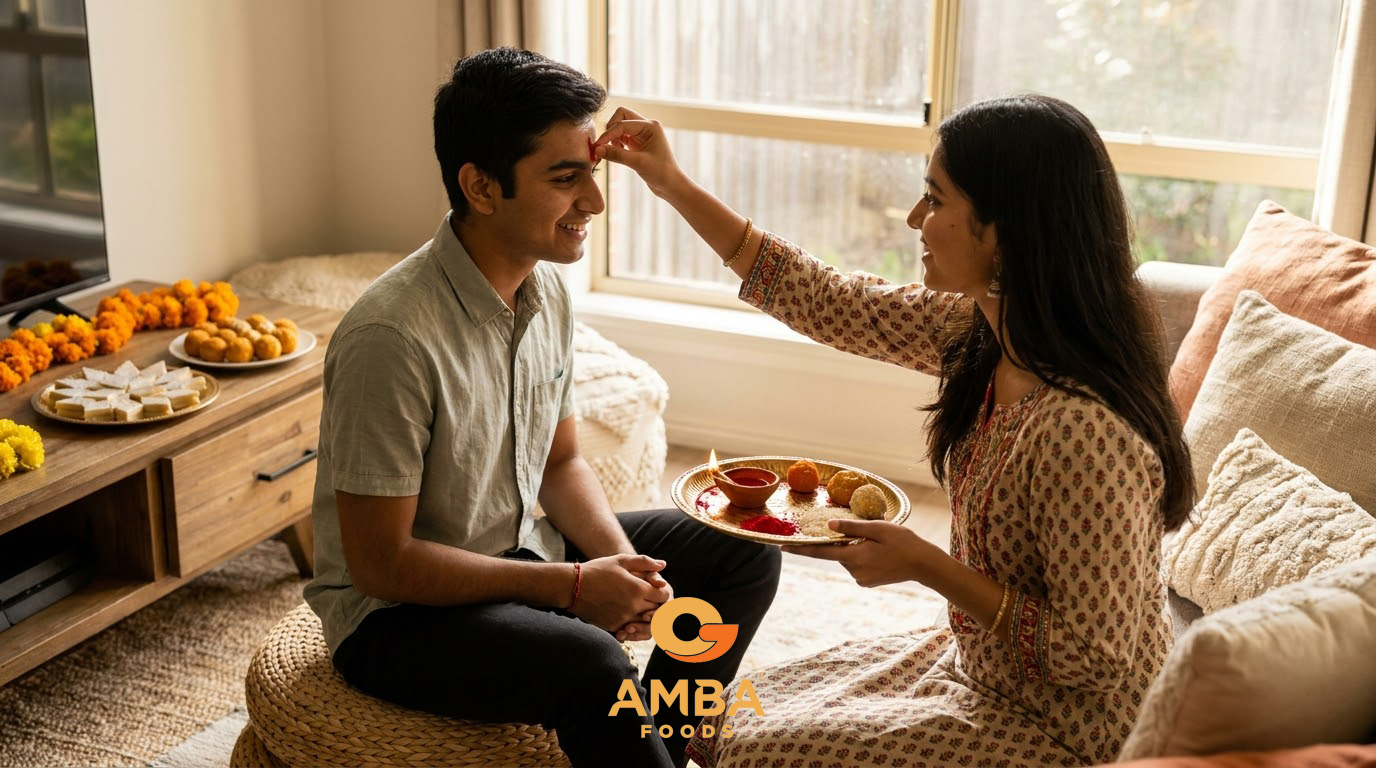
- The sister prepares a thali with roli or kumkum, rice grains, a diya, sweets and sometimes a coconut or flowers.
- The brother sits facing her, often on a small seat or a mat, sometimes with a cloth over his head.
- The sister applies the tilak to his forehead and places a few grains of rice on it.
- She performs an aarti with the diya and prays for his long life and wellbeing.
- She feeds him a sweet, and he gives her a gift in return.
- The family eats together, traditionally at the sister’s home.
The tilak is traditionally done in the afternoon, during a window called the aparahna. Timings depend on your city, so check a panchang set to Melbourne, Sydney or wherever you are.
Bhai Dooj across India
The same day carries different names and slightly different rituals:
- Bhai Dooj across most of North India.
- Bhau Beej in Maharashtra, Goa and parts of Karnataka.
- Bhai Phonta in Bengal, where the sister applies a phonta, a small mark of sandalwood paste, and recites a traditional verse.
- Bhai Tika in Nepal, the final day of Tihar, with a tika of seven colours.
Bhai Dooj vs Raksha Bandhan
Both celebrate the sibling bond, but they are different occasions. On Raksha Bandhan, the sister ties a rakhi and the brother promises to protect her. On Bhai Dooj, the sister applies a tilak and prays for her brother’s long life, and the focus is on visiting and eating together. Our Raksha Bandhan sweets guide covers the August festival.
Celebrating Bhai Dooj in Australia
A midweek Bhai Dooj
With Bhai Dooj on a Wednesday this year, most families will do the tilak after work, followed by dinner at the sister’s home. Plan the meal ahead, keep the thali ready, and do not worry if the timing is not perfect. The intention is what matters.
When you live in different cities
Plenty of siblings in Australia live interstate, or have one sibling here and one overseas. A few ways to keep the day:
- Tilak over video call. The sister performs the aarti on screen and the brother applies the tilak himself.
- Send sweets ahead. A box arriving before the day means you can share a sweet at the same moment, even apart.
- Celebrate on the weekend. If you can visit the weekend before or after, many families shift the meal and keep the tilak on the day itself.
Fresh sweets for a midweek festival
Bhai Dooj comes three days after Diwali, and fresh sweets bought for the Diwali weekend may be past their best by Wednesday. Shelf-stable sweets such as kaju katli, barfi, peda and ladoo will keep, but buy fresh milk sweets such as kalakand or rasmalai closer to the day. Our storage guide covers how long each one lasts.
Sweets for Bhai Dooj
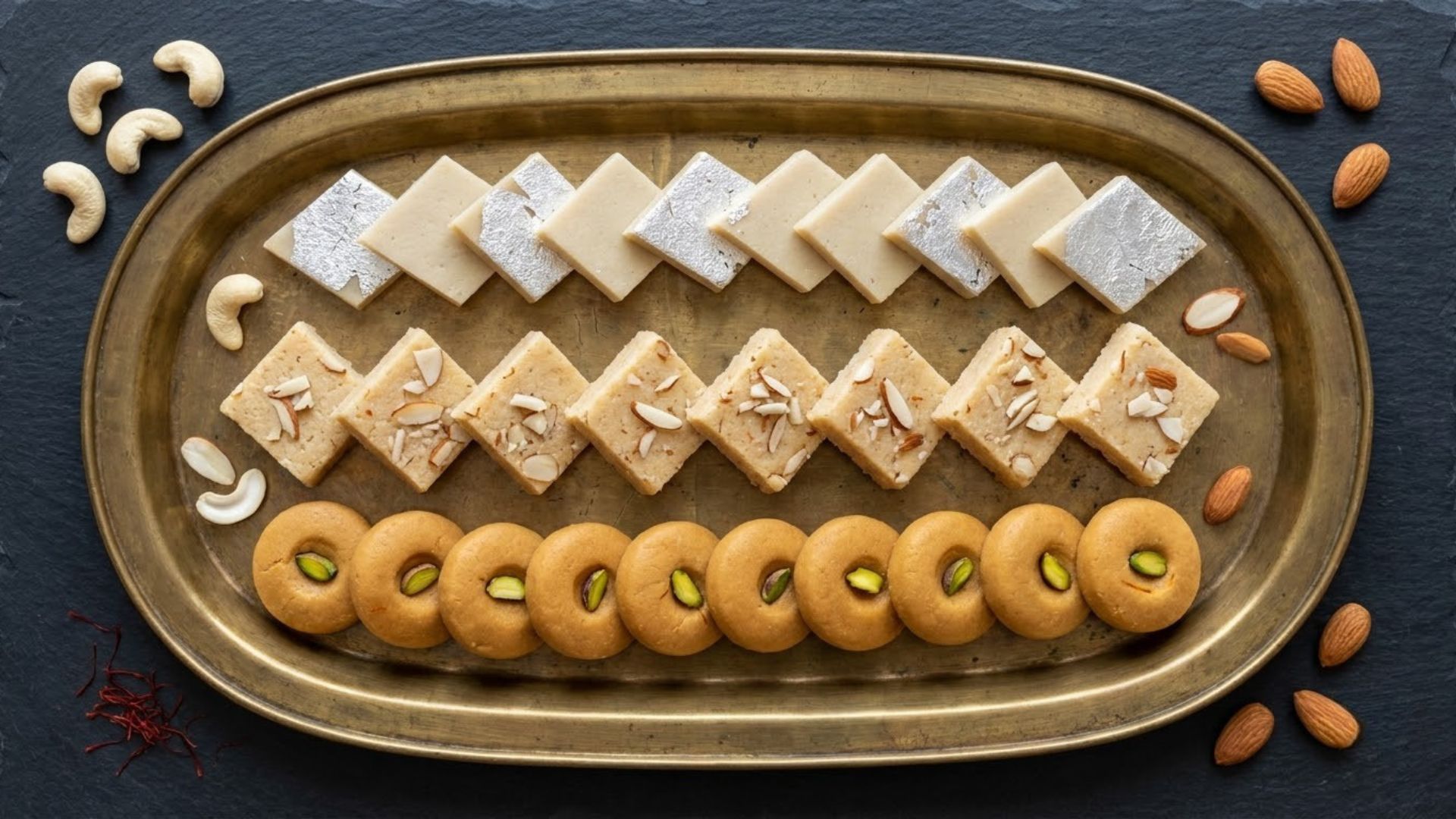
The best sweet is the one your brother loves. Most families keep a few favourites on the thali:
- Kaju katli, the classic gift sweet.
- Motichoor ladoo, soft and festive.
- Gulab jamun, warm, for the meal afterwards.
- Kesar peda, a traditional offering sweet that keeps well.
Gift boxes for siblings
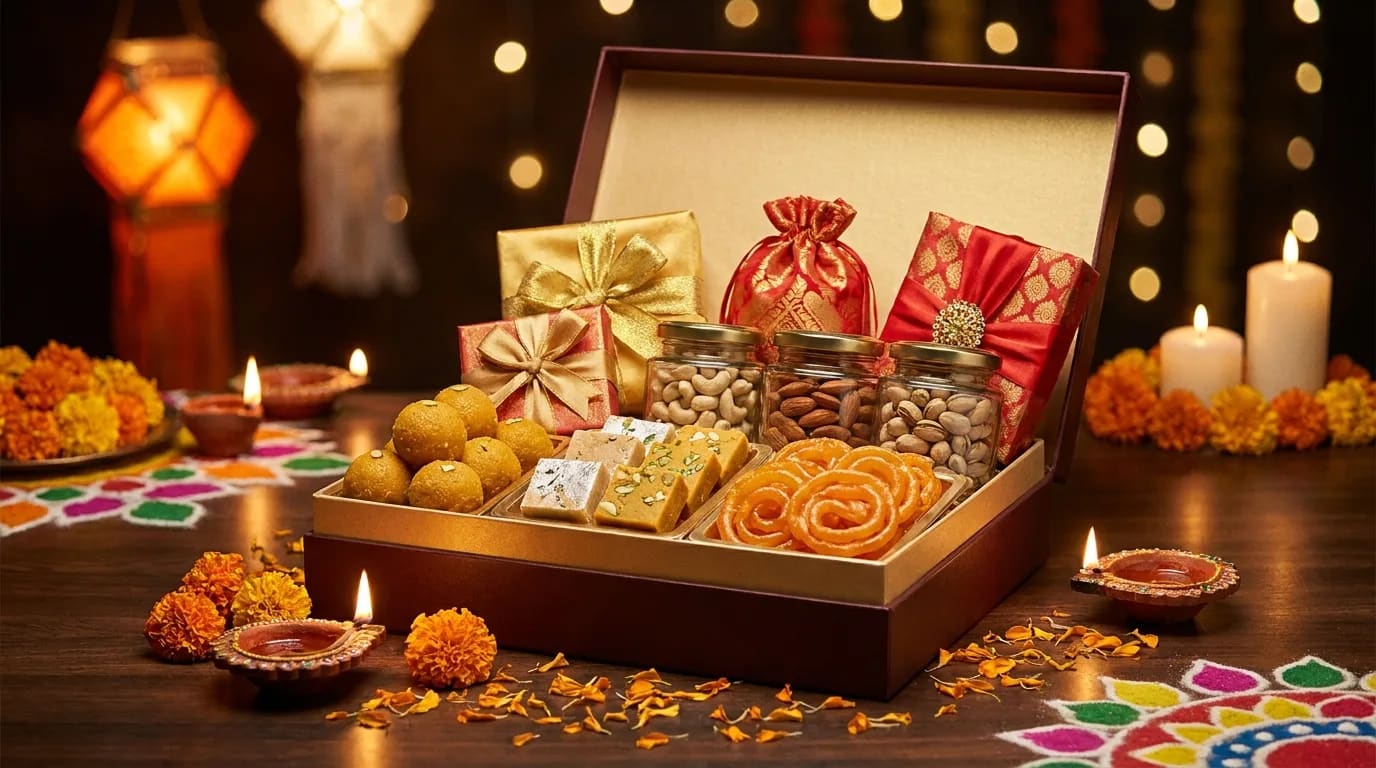
A box of sweets is the simplest Bhai Dooj gift, from either side.
| For | A good choice |
|---|---|
| A brother or sister who loves kaju katli | Lavender Kaju Katli & Barfi Box |
| A gift that looks special on arrival | Royal Plum Rolled Mithai Box |
| Young siblings or nieces and nephews | Mithai & Nuts Gift Tray, with chocolates |
| A sibling who prefers nuts | Dry Fruit Window Box |
| A big family gathering | Golden Ladoo Window Box, 12 motichoor ladoo |
Our Range
Browse Our Full Product Range
750+ authentic Indian food products — sweets, snacks, ready-to-heat meals and more. Available at Indian grocery stores across Australia.
View All ProductsOrdering
We make fresh mithai and Diwali gift boxes in our Melbourne kitchen. Our guide to the best Diwali gift boxes in Melbourne covers the full range. To order, call 1300 790 350 or send an enquiry.
Frequently asked questions
When is Bhai Dooj in 2026? Most panchangs used in Australia put Bhai Dooj on Wednesday 11 November 2026. Some calendars list Tuesday 10 November, so follow your family’s or temple’s calendar.
Why is Bhai Dooj three days after Diwali in 2026? The new moon that carries Diwali night runs on past sunrise on Monday 9 November, which pushes Govardhan Puja to Tuesday 10 November and Bhai Dooj to Wednesday 11 November.
What is done on Bhai Dooj? The sister applies a tilak to her brother’s forehead, performs an aarti, prays for his long life and feeds him a sweet. The brother gives her a gift, and the family usually eats together at the sister’s home.
What is the difference between Bhai Dooj and Raksha Bandhan? On Raksha Bandhan, the sister ties a rakhi and the brother promises to protect her. On Bhai Dooj, the sister applies a tilak and prays for her brother’s long life, and the day centres on visiting and sharing a meal.
Which sweets are given on Bhai Dooj? Kaju katli, ladoo, peda, barfi and gulab jamun are all common. The best choice is your brother’s or sister’s favourite.
How can I celebrate Bhai Dooj if my sibling lives far away? Do the tilak and aarti over a video call, send a box of sweets ahead so you can share one at the same time, or celebrate together on the nearest weekend.
Get in Touch
Have Questions? We're Here.
Call us on 1300 790 350 or send us a message — our team responds within 1 business day.
Contact Us