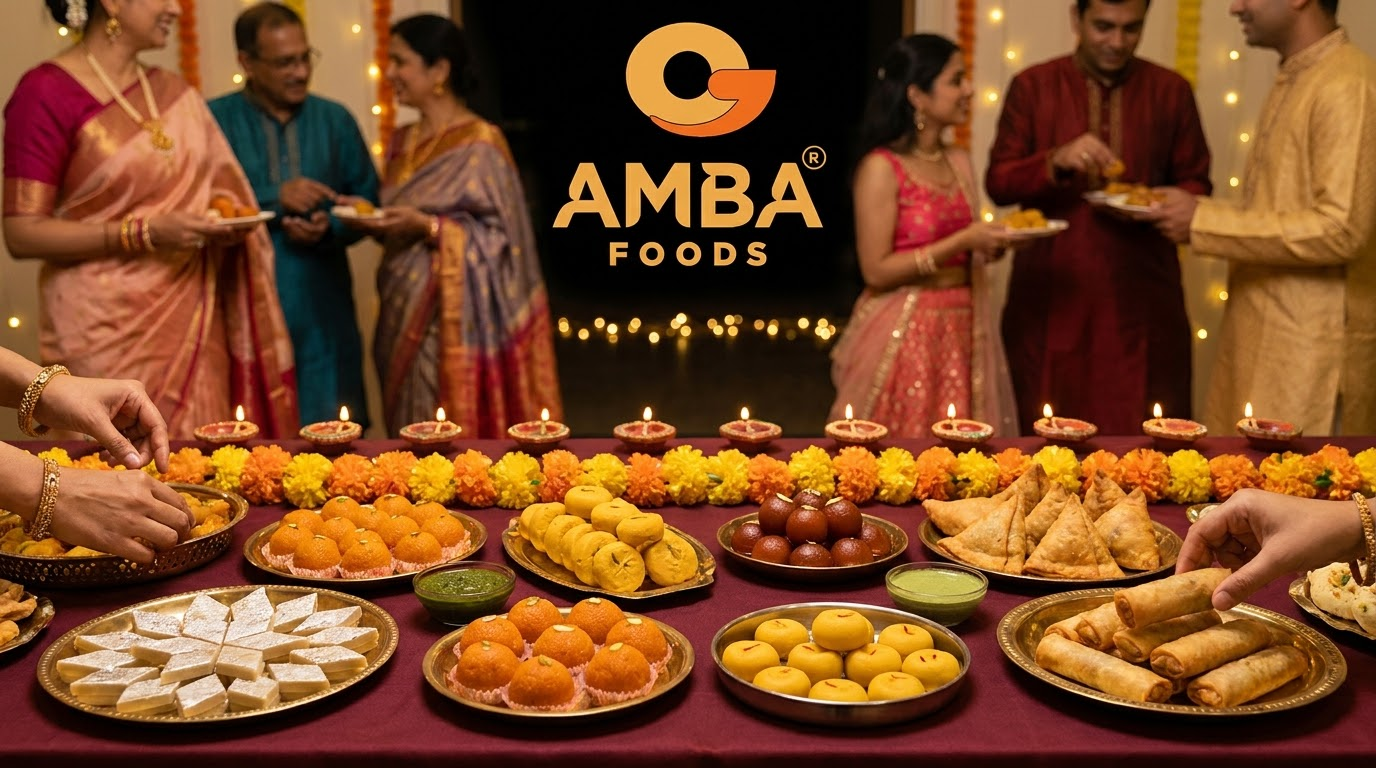










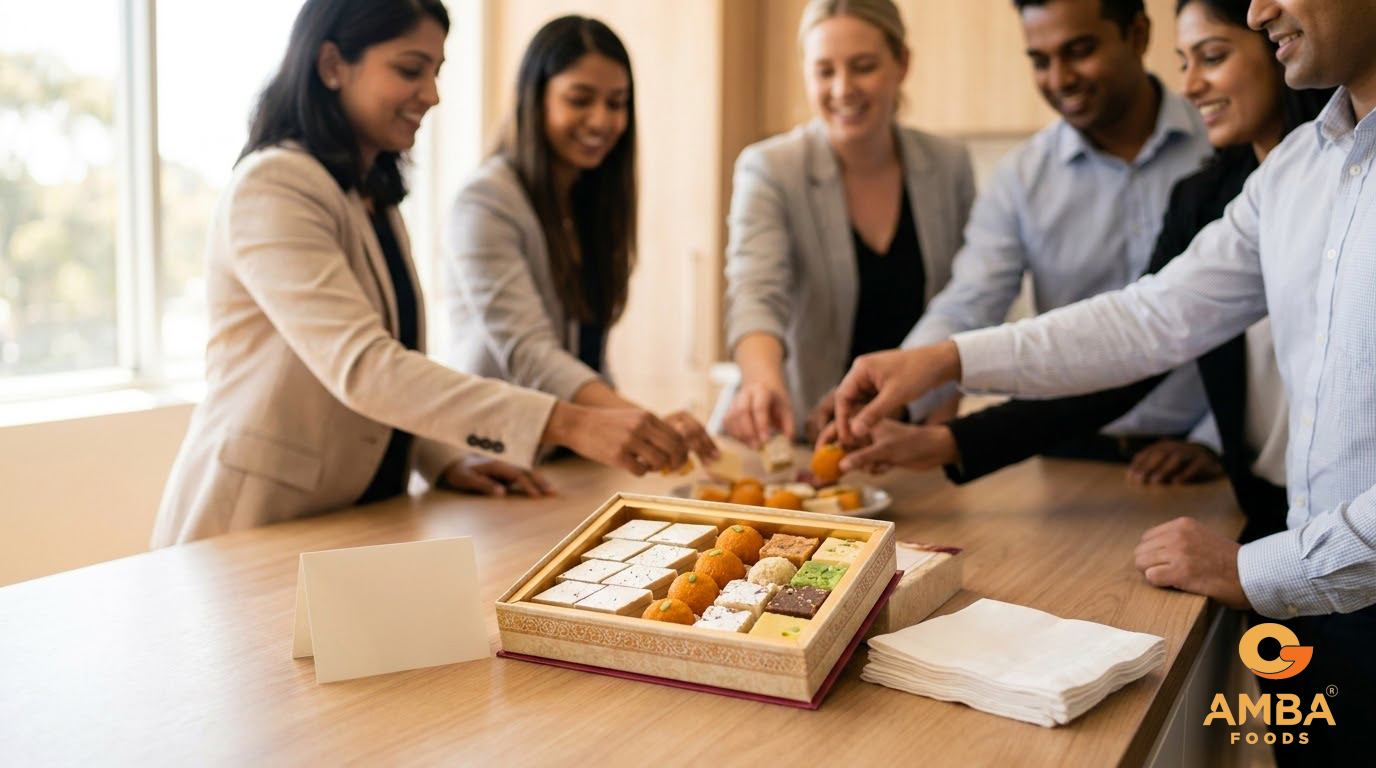
On the Monday after Diwali, in offices all over Melbourne, a box appears on the kitchen bench. There is usually a note. By eleven o’clock it is empty, and at least three people have asked what that orange one was.
Sharing sweets is at the heart of Diwali, and for a lot of Australians, a colleague’s box of mithai is their first taste of the festival. It is a lovely tradition to bring into a workplace or a street, and it is easy to do well.
This guide is about sharing your Diwali with the people around you: which sweets work for people trying them for the first time, how to explain what is inside, and a few practical rules worth knowing. If you are organising gifts for a whole company, our guide to corporate Diwali gifting covers that side.
Which sweets suit first-timers
Some Indian sweets are an easy introduction. Others are better saved for people who already love them.
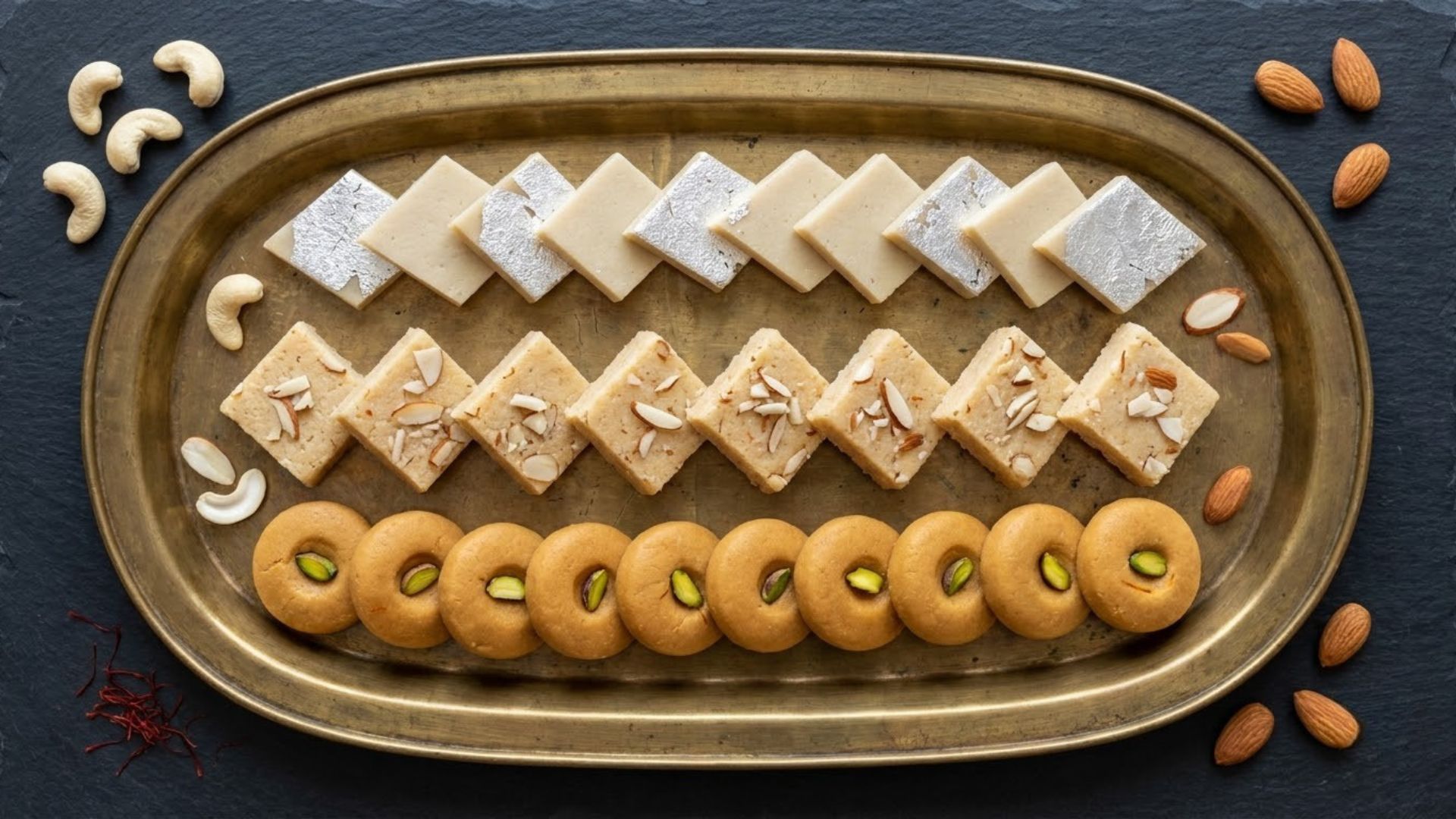
Kaju katli is the safest start. Thin diamonds of cashew and sugar with a smooth, mild flavour, it reminds most people of a soft fudge. Kaju katli is the one people go back for.
Motichoor ladoo is bright, soft and fun to explain. Tiny pearls of fried gram flour soaked in syrup and pressed into a ball, it looks like nothing else on the bench.
Milk cake wins over anyone who likes caramel. Slow-cooked milk turns grainy and fudgy with a darker centre. Our milk cake is a favourite with people who think they do not like Indian sweets.
Barfi in its many forms is easy to like and easy to pick up.
Save for later: syrup sweets like gulab jamun and chilled sweets like rasgulla are wonderful, but they need bowls, spoons and a fridge. They are better at a dinner than on an office bench.
Boxes that work well for sharing
| Who you are sharing with | A good choice |
|---|---|
| A team that has never tried mithai | Lavender Kaju Katli & Barfi Box |
| A bigger team or a whole floor | Golden Ladoo Window Box, 12 motichoor ladoo |
| A neighbour with children | Mithai & Nuts Gift Tray, with chocolates |
| A colleague who does not eat sweets | Dry Fruit Window Box |
How to explain what is inside
A short note makes all the difference. People are far more likely to try something when they know what it is, and the note turns a box of sweets into a small introduction to Diwali.
Here are two you can copy and adapt.
For the office:
Happy Diwali! Diwali is the festival of lights, celebrated by Hindu, Sikh and Jain families around the world. Sharing sweets is a big part of it, so please help yourself. Inside: kaju katli (cashew fudge with edible silver), motichoor ladoo (sweet gram-flour pearls) and barfi. Contains nuts and dairy.
For neighbours:
Happy Diwali from number 12! Diwali is our festival of lights, and we share sweets with the people around us for good luck in the year ahead. We hope you enjoy them. These contain nuts and dairy.
Keep it short and friendly. Nobody needs a history lesson, just enough to know what they are eating and why.
Allergies and dietary needs
Most mithai contains dairy, many sweets contain nuts, and Indian sweet kitchens usually handle nuts, dairy and wheat every day. A few habits keep everyone safe:
- Always mention nuts and dairy on the note, even if you think the box has none.
- Never describe a sweet as nut-free unless the maker has confirmed it.
- Mithai is not vegan. It is usually made with milk, ghee or khoya.
- Check your workplace’s food policy. Some offices have shared kitchen rules, especially around nuts.
For a colleague who cannot eat what is in the box, a small separate gift, like a few diyas, is a thoughtful alternative.
Timing at work
Diwali falls on Sunday 8 November 2026. That gives you two good moments at work:
- Friday 6 November, which is also Dhanteras, the first day of the festival. Bring the box in before the weekend.
- Monday 9 November, the day after Diwali, when the leftover-sweets tradition is at its strongest.
Put the sweets on a plate or open the box fully, add napkins, and keep it out of direct sun. Fresh mithai is dairy, and a warm windowsill is not its friend.
Sharing with neighbours
Diwali is a visiting festival, and in India, sweets go door to door over the weekend. Bringing that tradition to your street is a nice way to meet people.
Drop a small box over the Diwali weekend with your note. If you are lighting diyas along your front step, invite the kids next door to help. And if your neighbours are curious to see more, Melbourne’s biggest public Diwali festivals are on Saturday 31 October. Our guide to Diwali in Melbourne 2026 has the details.
A note on schools
Sending sweets to your child’s school is a lovely idea, but check first. Many Australian schools and kindergartens have nut-aware or no-shared-food policies, and most Indian sweets contain nuts or are made alongside them.
Ask the teacher before sending anything. If food is not allowed, a short Diwali storytime, a rangoli activity or a few paper lanterns are often welcome instead.
If you are invited in return
If your sharing leads to a Diwali invitation, our guide on what to bring to a Diwali party covers what to take and what to expect.
Our Range
Browse Our Full Product Range
750+ authentic Indian food products — sweets, snacks, ready-to-heat meals and more. Available at Indian grocery stores across Australia.
View All ProductsOrdering
We make fresh mithai and Diwali gift boxes in our Melbourne kitchen. Our guide to the best Diwali gift boxes in Melbourne covers the full range. To order, call 1300 790 350 or send an enquiry.
Frequently asked questions
What Indian sweets should I share with colleagues who have never tried them? Kaju katli is the safest start because it is mild and smooth, a little like a soft fudge. Motichoor ladoo, milk cake and barfi are also easy to like. Save syrup and chilled sweets for occasions with bowls and a fridge.
What should I write on a note with Diwali sweets? Keep it short: wish people a happy Diwali, explain in one line that it is the festival of lights and sharing sweets is part of it, name what is inside, and mention that the sweets contain nuts and dairy.
Are Indian sweets safe for people with nut allergies? Often not. Many Indian sweets contain nuts, and sweet kitchens usually handle nuts every day. Always mention nuts on your note and never describe a sweet as nut-free unless the maker confirms it.
Can I send Diwali sweets to my child’s school? Check with the teacher first. Many Australian schools have nut-aware or no-shared-food policies. If food is not allowed, a Diwali activity or story is often welcome instead.
When should I bring Diwali sweets to work in 2026? Friday 6 November, which is Dhanteras, or Monday 9 November, the day after Diwali on Sunday 8 November.
Is it okay to give Diwali sweets to people who do not celebrate Diwali? Yes. Sharing sweets with everyone around you is part of the festival, and most people are delighted to be included.
Get in Touch
Have Questions? We're Here.
Call us on 1300 790 350 or send us a message — our team responds within 1 business day.
Contact Us