











Ganesh Chaturthi falls on Monday, 14 September 2026, and for ten days after it a good part of Indian Australia rearranges itself around a clay idol in the living room.
The festival travels well. It needs a murti, a space to install it, flowers, and sweets — and of those four, the sweets are the part families think about longest. Ganpati is the deity most closely associated with food, and specifically with one sweet in particular.
Why modak
The story most often told is simple. Ganesha was offered a plate of modak and found them so good that he ate the lot, which is why he is depicted with a rounded belly and, in many idols, holding a modak in one hand. The sweet became modakapriya — beloved of modak — and offering them is understood as the most direct way to please him.
Traditionally twenty-one are offered. The number carries its own significance, and in practice it means most households making modak at home are making a serious quantity of them.
There are two forms:
Ukadiche modak — the Maharashtrian original. A steamed rice-flour shell, pleated by hand into a pointed dumpling, filled with fresh coconut and jaggery. Soft, delicate, eaten warm, and best within hours of steaming.
Fried modak — a wheat-flour shell, deep-fried, closer to a small gujiya in texture and considerably more forgiving. It keeps for days rather than hours, which is why it dominates outside Maharashtra.
The pleating is the hard part. Twelve to twenty-one folds, done with wet fingers on hot dough, and a shell thin enough to be translucent without tearing. It takes practice, and it takes an afternoon.
Our gujia sits in the same family — hand-shaped, khoya-filled, fried — and is what a number of Melbourne households use when they want that pastry-and-filling element without committing a day to pleating.
The rest of the prasad thali
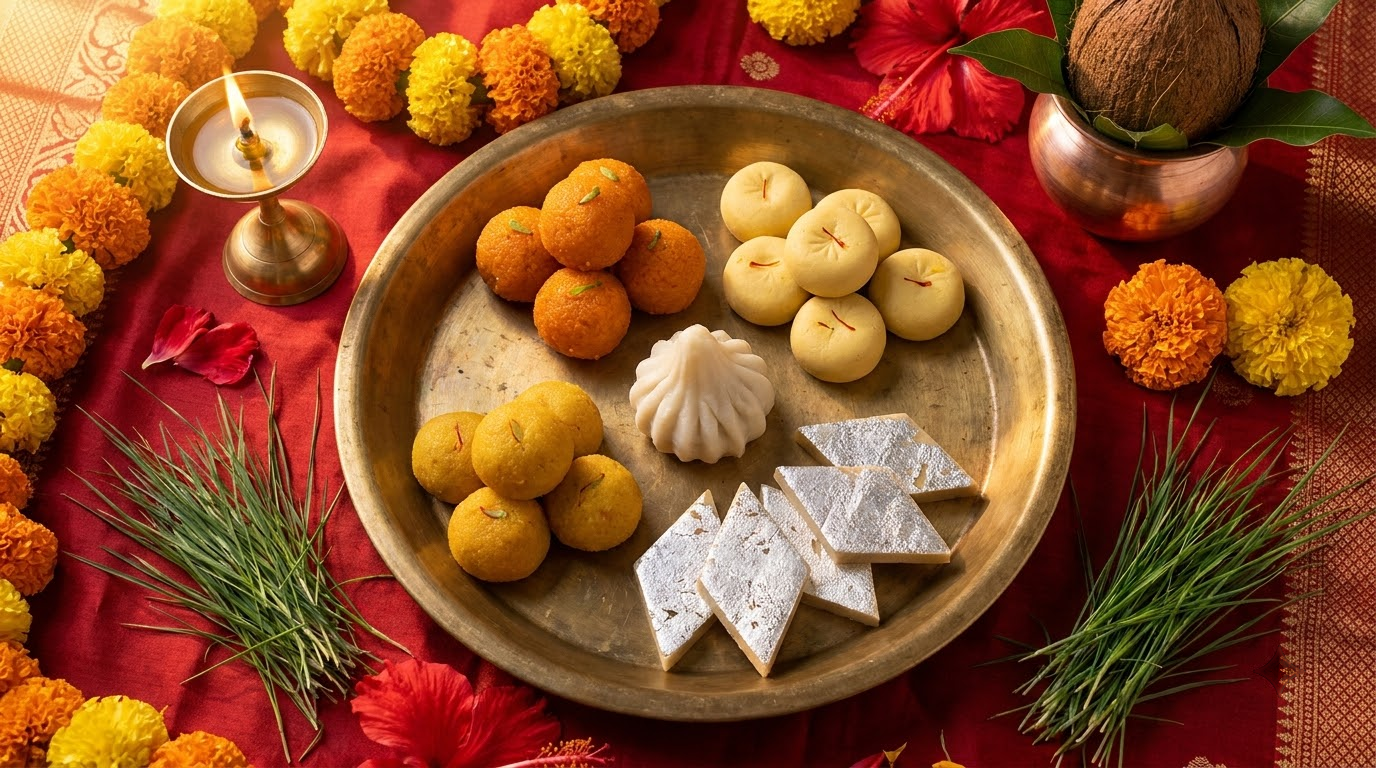
Modak leads, but it rarely stands alone. The offering plate and the guest table draw on a wider set.
Ladoo
If modak is Ganpati’s sweet by legend, ladoo is his sweet by practice. Boondi and motichoor ladoo appear on more Ganesh Chaturthi thalis in Australia than anything else — round, golden, easy to distribute, and long associated with the deity in their own right.
Motichoor ladoo is the default for both puja and prasad distribution. It travels, it portions cleanly, and it doesn’t need refrigeration for the length of an evening.
For prasad boxes or gifts to visiting families, our Motichoor Ladoo Golden Window Box and Crimson Boondi Ladoo Box each hold 12 ladoo, ready-boxed.
Peda
Kesar peda and mathura peda are the standard offering sweet across much of North India, and they work particularly well on a thali that will sit out through a long puja — dense, low-moisture, and stable at room temperature.
Barfi and katli
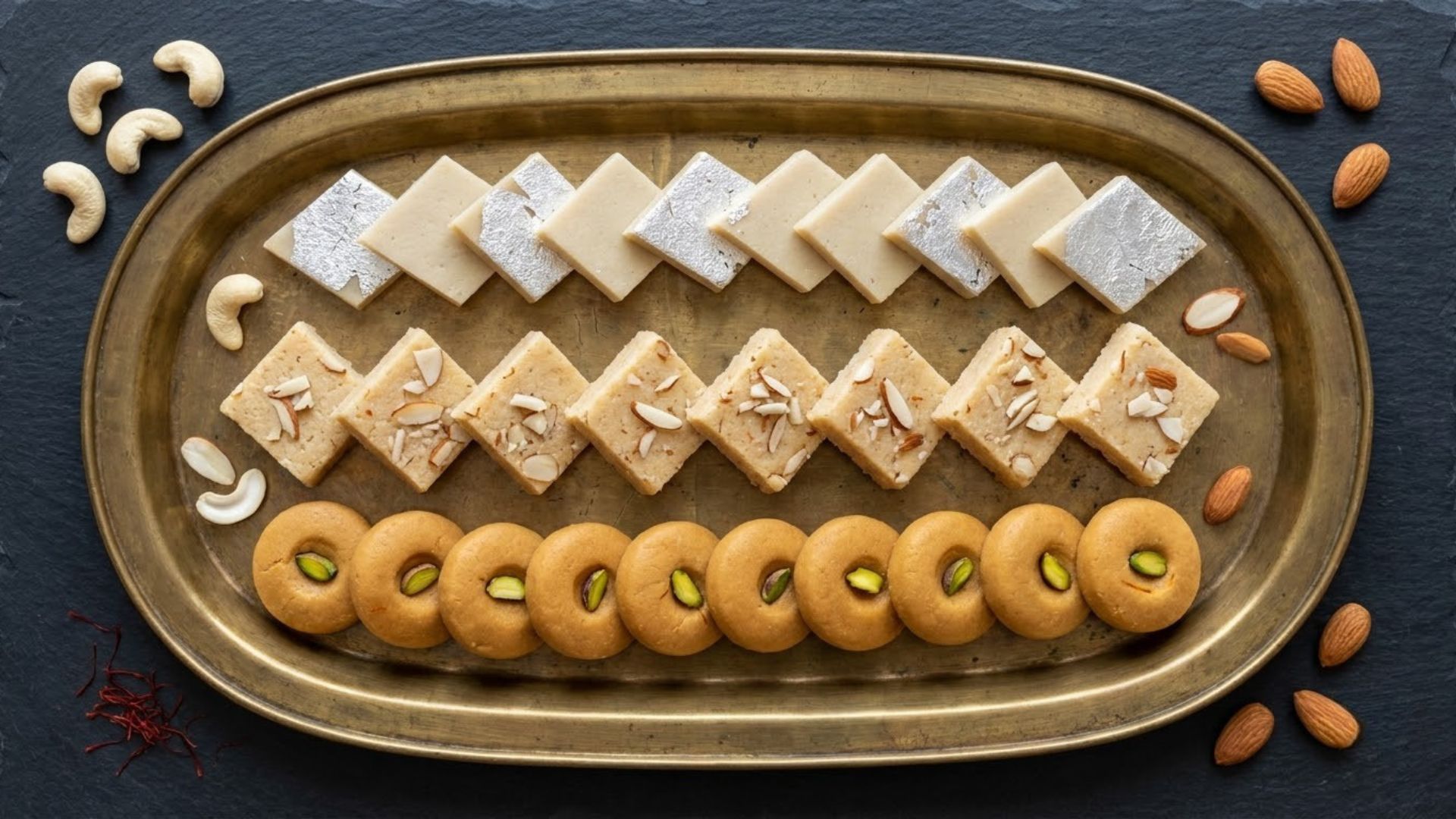
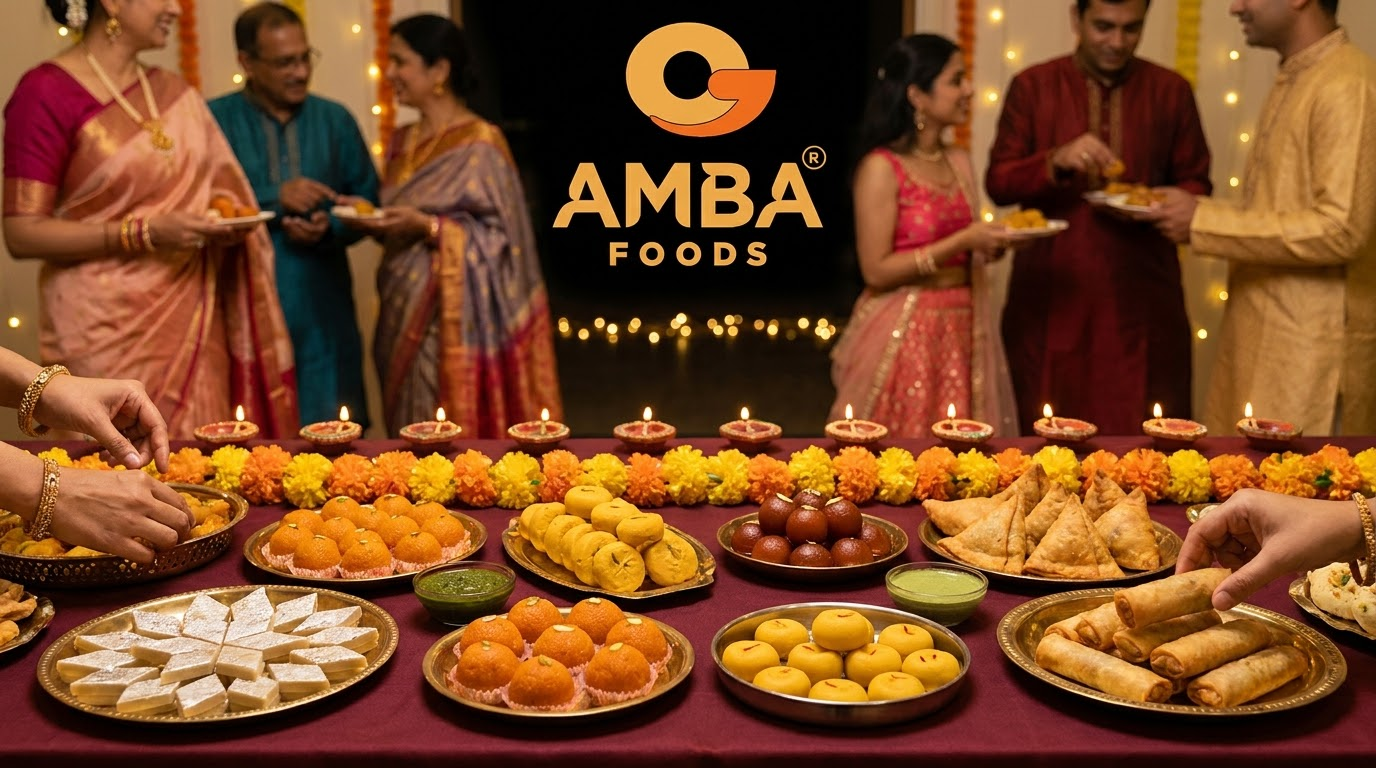
Kaju katli, kaju kesar katli and almond barfi are what most families put out for visitors rather than on the offering plate itself. Ganesh Chaturthi is a visiting festival — neighbours drop in for darshan across the ten days — and having something cut and ready matters more than it does for a one-day observance.
Milk sweets
Kalakand and milk cake danedar round out the spread. Both are khoya-based, both are grainy in the way that reads as freshly made, and both suit a Melbourne September evening better than anything chilled.
Coconut
Coconut runs through the whole festival — it’s in the modak filling, it’s offered whole at the puja, and coconut-based sweets carry an association with the occasion that goes beyond taste.
Ten days, not one
The thing that catches first-time hosts out is duration. Ganesh Chaturthi isn’t a single evening. Depending on family tradition the murti stays for one and a half, five, seven or ten days, with visarjan at the end.
That has practical consequences for food:
Prasad is needed daily. Aarti happens morning and evening for the whole period. Something sweet is offered each time, and while it doesn’t need to be elaborate, it needs to be there.
Visitors arrive unpredictably. People come for darshan when they can. A stocked sweet box is more useful than a single grand spread on day one.
Buy in stages. Fresh dairy sweets don’t hold ten days. Households running the full period generally do two or three smaller purchases rather than one large one — and the second purchase, around day five or six, is the one most people forget to plan for.
Visarjan needs its own catering. The final day usually draws the largest gathering. If you’re hosting, treat it as a separate event rather than the tail end of the first one.
Celebrating in Australia
A few things that differ from doing this in Mumbai or Pune.
Eco-friendly visarjan. Many Australian councils restrict idol immersion in natural waterways. Clay murtis immersed in a tub at home, with the water later used in the garden, has become the standard approach — and several Melbourne temples and community associations run organised immersion facilities. Check locally before the day.
Community pandals. Melbourne, Sydney and Perth all have sizeable community Ganpati installations now, generally run by Maharashtrian associations and open to all. For families in apartments or without space for a home installation, this is where the festival actually happens.
Order ahead. The week before Ganesh Chaturthi is one of the tightest in the Indian sweet calendar in Australia, and it runs straight into the Navratri and Diwali build-up. Sweet shops sell out. Three to four days’ notice is the realistic minimum, more if you want a specific item.
Spring helps. Mid-September in Australia is warming up rather than cooling down, which suits a festival built around open doors and visitors — and, less romantically, means keeping fresh dairy sweets refrigerated between servings matters more than it would in an Indian September.
Our Range
Browse Our Full Product Range
750+ authentic Indian food products — sweets, snacks, ready-to-heat meals and more. Available at Indian grocery stores across Australia.
View All ProductsFor retailers and caterers
Ganesh Chaturthi occupies an awkward but valuable position in the festive calendar — big enough to move serious volume, but frequently under-stocked because it sits between Janmashtami and the much larger Navratri-to-Diwali block.
Patterns worth planning for:
Demand runs ten days, not one. Unlike most festivals, sell-through continues well past the opening date. Stores that stock for a single-day peak run empty by day four and miss the back half entirely.
Ladoo and peda dominate. Volume concentrates in the offering sweets rather than the premium ones. Motichoor ladoo in particular moves in quantity.
Repeat visits are the pattern. The same customer returns two or three times across the period. That rewards range over depth — having something different available on the second visit.
It’s the Diwali warm-up. Stock ordered for Ganesh Chaturthi rolls directly into Navratri in October and Diwali in November. The inventory risk is lower than a standalone festival, and the sell-through data tells you what to order heavily for the peak.
Amba Foods makes fresh mithai in Melbourne and supplies grocery stores, restaurants, caterers and event businesses across Australia, with distributed snack, frozen and pantry lines on the same delivery.
Wholesale Supply
Stock Amba Foods Products in Your Store
Wholesale supply for retailers, restaurants and caterers across Australia. Competitive pricing, reliable delivery.
Wholesale EnquiryGanpati Bappa Morya
There’s a phrase shouted at visarjan — Ganpati Bappa Morya, pudhchya varshi lavkar ya. Ganpati Bappa, come back soon next year.
It’s said while carrying the idol away, which is a fairly Indian way to handle a goodbye: the departure and the invitation to return in the same breath. For families a long way from where they first learned it, that sentiment tends to land somewhat harder than it used to.
Get in Touch
Have Questions? We're Here.
Call us on 1300 790 350 or send us a message — our team responds within 1 business day.
Contact Us