











Hariyali Teej falls on Sunday, 26 July 2026, landing in the middle of the Shravan month that Indian communities across Australia are already observing. Where Shravan overall is quiet and devotional, Teej is the opposite — green sarees, mehndi, swings hung from trees, and a table that leans firmly toward sweets.
For Indian families in Melbourne, Sydney and Perth, the challenge is rarely the ritual. It’s sourcing. Ghewar doesn’t appear in Woolworths, and a July celebration in the southern hemisphere means recreating a monsoon festival in the middle of winter.
This guide covers what’s traditionally eaten, how the fast actually works, and what’s realistically available in Australia.
What Hariyali Teej is
Hariyali Teej marks the reunion of Shiva and Parvati, and is observed most widely across Rajasthan, Uttar Pradesh, Haryana, Bihar and Madhya Pradesh. Married women fast for the wellbeing and longevity of their husbands; unmarried women often observe it hoping for a good match.
“Hariyali” means greenery. The festival arrives with the monsoon in India, when the landscape turns green after months of heat — hence the green sarees, green bangles and green in the decorations. It’s the first of three Teej festivals, followed by Kajari Teej and Hartalika Teej later in the season.
The mood is celebratory rather than austere. Women gather, apply mehndi, sing traditional songs, and swings are traditionally set up under trees.
How the Teej fast works
The observance varies significantly by family and region, so it’s worth knowing which version you’re following before planning food.
Nirjala vrat — the strictest form, without food or water for the full day, broken after evening puja. This is the traditional observance in much of Rajasthan and UP.
Phalahar vrat — fruit, milk, and vrat-permitted foods through the day. Far more common in practice, particularly among families in Australia balancing the fast with work and childcare.
Sattvik meal only — no fast as such, but grain-free and onion-garlic-free food for the day.
If you’re observing phalahar, the standard vrat rules apply: no wheat, rice, lentils, onion, garlic or common salt. Sendha namak (rock salt) replaces regular salt. Permitted staples are sabudana, singhara and kuttu flour, potato, sweet potato, makhana, dairy, fruit and nuts.
Our Sabudana Tikki is the one confirmed vrat-friendly item in the Amba Foods range, and it’s the item most Melbourne families reach for when breaking the fast — crisp, filling, and no preparation beyond heating.
The traditional Teej menu
Ghewar — the signature sweet
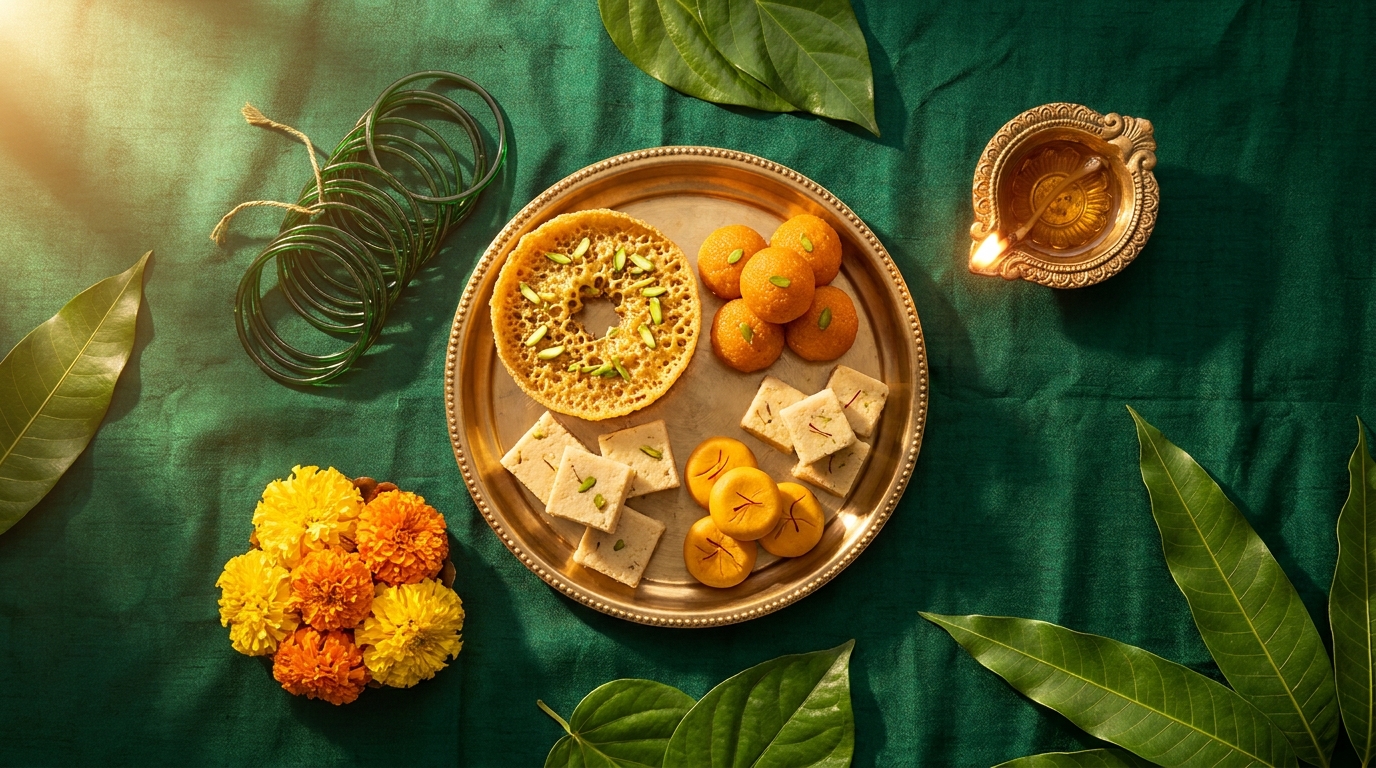
If Teej has one defining dish, it’s ghewar. The disc-shaped Rajasthani sweet, honeycombed with tiny holes, soaked in sugar syrup and topped with rabri, malai or a scatter of pistachios, is inseparable from the festival. In Jaipur, sweet shops sell it by the tonne through Shravan.
Making it at home is genuinely difficult — the batter has to be poured in a precise stream into very hot ghee to achieve the lattice structure. Most families in Australia buy it rather than attempt it, and it’s worth ordering early because Melbourne sweet shops sell out around the festival.
Ghevar’s supporting cast
Beyond ghewar, the Teej table typically carries:
Kheer — rice kheer, or sabudana kheer if the household is keeping the fast strictly.
Malpua — soft fried pancakes in sugar syrup, often served alongside rabri.
Halwa — suji halwa, or gajar halwa where carrots are available and good, which in an Australian July they generally are.
Laddoo — motichoor ladoo is the most common, both for the puja thali and for distributing to guests.
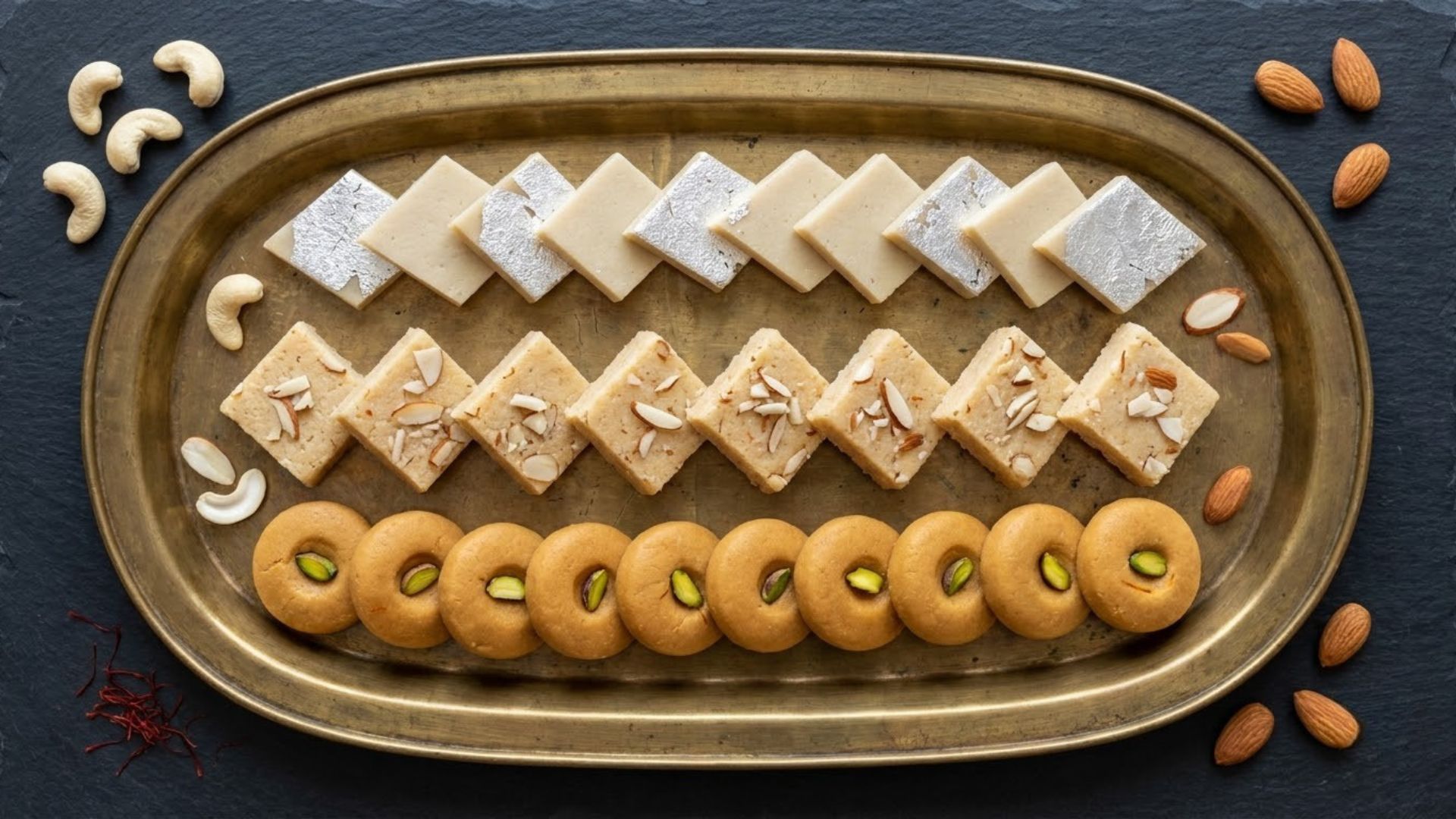
Peda and barfi — kesar peda, kalakand and almond barfi all work for the thali and for gifting between households.
Dry fruit panjiri — dry fruit panjiri is traditional in North Indian households and doubles as a vrat-appropriate energy food.
The savoury side
The evening meal after the fast breaks is typically simple: puri with aloo sabzi, or a light sattvik thali. Some families serve pindi chole with rumali roti for a fuller spread when hosting.
Celebrating Teej in an Australian winter
The seasonal inversion is the practical hurdle. Teej is a monsoon festival, and late July in Melbourne is cold, grey and short on daylight. A few adjustments help:
Move it indoors, keep the green. Green sarees and bangles carry the visual identity of the festival without needing a garden. Marigold and green drapes do more work than any outdoor element.
Swap the swing for a gathering. The jhoola is difficult to replicate in a suburban Australian home. Most community groups here have settled on afternoon gatherings — mehndi, songs, food — as the substitute, and it works.
Lean on warm sweets. Hot gajar halwa and fresh malpua suit a cold Melbourne evening far better than they suit a Jaipur monsoon. The season actually favours you here.
Order sweets early. Melbourne’s Indian sweet shops face a compressed rush around Teej. Ordering three to four days ahead avoids disappointment, particularly for ghewar.
Our Range
Browse Our Full Product Range
750+ authentic Indian food products — sweets, snacks, ready-to-heat meals and more. Available at Indian grocery stores across Australia.
View All ProductsFor retailers and caterers
Teej sits in an underserved window. It falls between the Shravan build-up and the much larger Raksha Bandhan and Janmashtami rush in August, and many independent grocers under-stock it because the demand is concentrated into roughly a four-day period.
The pattern worth planning around:
Demand spikes 3–4 days out, not on the day itself. Families buy ahead for gatherings.
Sweets dominate the basket. Motichoor ladoo, peda, barfi and kalakand move fastest. Ghewar sells out first where available.
Vrat-friendly SKUs matter. Sabudana products, makhana and sendha namak see a clear lift through all of Shravan, not just Teej.
It’s a bridge to Raksha Bandhan. Stock ordered for Teej rolls straight into the Rakhi season two weeks later, so the inventory risk is lower than it looks.
For grocers, restaurants and caterers planning the Shravan-to-Janmashtami festive block, Amba Foods supplies fresh mithai, frozen snacks and ready-to-heat lines across Australia — manufactured in Melbourne and delivered nationally.
Wholesale Supply
Stock Amba Foods Products in Your Store
Wholesale supply for retailers, restaurants and caterers across Australia. Competitive pricing, reliable delivery.
Wholesale EnquiryA note on observing away from home
Teej is a festival built on gathering. Its whole texture — the singing, the mehndi, the shared table — assumes a group of women who’ve known each other a long time. For families who’ve migrated, that’s the part that’s hardest to reconstruct, and no amount of correct sourcing replaces it.
What has emerged in Australian cities instead is worth noting: community groups, temple associations and neighbourhood friend circles have built their own versions, often mixing regional traditions that would never have shared a room in India. A Rajasthani ghewar next to a Bihari thekua on the same table is a fairly Australian outcome, and not a lesser one.
Get in Touch
Have Questions? We're Here.
Call us on 1300 790 350 or send us a message — our team responds within 1 business day.
Contact Us