












Running a successful Indian grocery store in Australia means consistently stocking the products your customers want — at the right price, with reliable replenishment and minimal out-of-stock situations.
Whether you’re opening a new store, taking over an existing one or looking to improve your current supply chain, this guide covers everything you need.
Understanding Your Customer Base First
Before thinking about products, understand who you’re serving. Indian grocery store customers in Australia typically fall into three segments:
First-generation immigrants have strong brand loyalty and will specifically ask for brands they grew up with in India or Pakistan. They notice immediately if a product tastes different or if their preferred brand is unavailable.
Second-generation customers are often more flexible on brands but have high expectations for authenticity and freshness — particularly for ready-to-eat items and sweets.
Non-Indian customers (growing rapidly) are drawn by specific products — basmati rice, masalas, chutneys, lentils — and are often brand-agnostic but quality-sensitive.
Your product mix should serve all three groups.
The 8 Essential Product Categories
1. Staple Flours and Pulses
The foundation of every Indian grocery store. No store can operate without a strong range of:
- Atta (whole wheat flour) — the everyday flour for chapati and roti. Multiple brands, multiple pack sizes (2kg, 5kg, 10kg)
- Besan (gram flour) — essential for pakoras, kadhi, dhokla, ladoos and countless recipes
- Rice flour, semolina (sooji/rava) — for idli, dosa, upma and sweets
- Dals and lentils — Chana Dal, Moong Dal, Masoor Dal, Toor Dal, Urad Dal — multiple pack sizes
- Chickpeas and kidney beans (canned and dried)
Stock both premium and value options. Brands like Rajdhani perform strongly across flours and pulses.
2. Rice
Rice is one of the highest-volume categories in any Indian grocery store. You need multiple price points and varieties:
- Everyday Basmati — affordable daily-use basmati (1kg, 5kg)
- Premium aged Basmati — for biryanis and special occasions (1kg, 5kg)
- Parboiled (Sella) Basmati — preferred by many Pakistani customers for biryani
- Festival-grade Basmati — for Eid, Diwali and event catering
Dunar is one of the most recognised basmati brands in Australia across their Elonga, Festiva, Nawazish and Opera ranges. Customers specifically ask for it by name.
3. Spices and Masalas
This is where brand loyalty is strongest — and where you can differentiate.
Whole spices (cumin, coriander, cardamom, cloves, cinnamon, black pepper, mustard seeds, fenugreek) should always be in stock in multiple pack sizes.
Ground spices (turmeric, chilli powder, coriander powder, cumin powder, garam masala) are daily-use items that move fast.
Masala blends — biryani masala, chicken masala, karahi masala, nihari masala, sambar masala — are high-value items. Brands like Milan Foods offer an extensive range of Pakistani-style masala blends that are popular with Pakistani and North Indian communities.
Chaat masala, amchur, black salt — essential finishing ingredients that every serious Indian cook needs.
4. Oils and Ghee
- Mustard oil — essential for North Indian and Bengali cooking. Often hard to find outside Indian stores — a significant competitive advantage
- Coconut oil — for South Indian cooking
- Refined sunflower/vegetable oil — everyday cooking oil
- Ghee — pure clarified butter. Both domestic (Milkio, Surya) and Indian brands. Always stock multiple sizes
5. Condiments, Pickles and Chutneys
This category has extremely high brand loyalty. Customers who grew up on a specific mango pickle will not substitute easily.
Pickles (achar) — Mango Pickle, Mixed Pickle, Lime Pickle, Green Chilli Pickle, Garlic Pickle. Stock multiple brands. Pachranga is a recognised brand with strong demand across their full pickle range.
Chutneys and sauces — Date Tamarind sauce (essential for chaat), Mint chutney, Coriander chutney
Pastes — Ginger paste, Garlic paste, Ginger-Garlic paste (large pack sizes for restaurants)
6. Dairy and Paneer
- Paneer — fresh is best; frozen is acceptable. High turnover item especially on weekends
- Ghee — as above
- Lassi (sweetened and salted) — popular ready-to-drink item
- Buttermilk (chaas) — particularly popular in summer
For dairy brands, Verka and Mother Dairy have strong brand recognition with Indian customers.
7. Ready-to-Heat and Frozen Foods
This category has grown significantly as the Indian diaspora expands beyond first-generation immigrants.
Frozen snacks — Punjabi Samosa (multiple varieties and sizes), Veg Spring Roll, Pakoras, Kababs. Mazedar offers an extensive frozen snack range including jumbo samosas, cocktail spring rolls, chapli kababs and more.
Frozen breads — Parathas (plain and stuffed), Naan, Rumali Roti, Kulcha. High-volume everyday items especially for working families.
Ready-to-eat curries and gravies — increasingly popular for convenience-focused customers.
Indian desserts (frozen) — Halwa varieties, Kulfi, Gulab Jamun, Rasgulla. Mazedar’s frozen sweet range covers almond halwa, carrot halwa, pistachio kulfi, khoya kulfi and more.
8. Fresh Indian Sweets
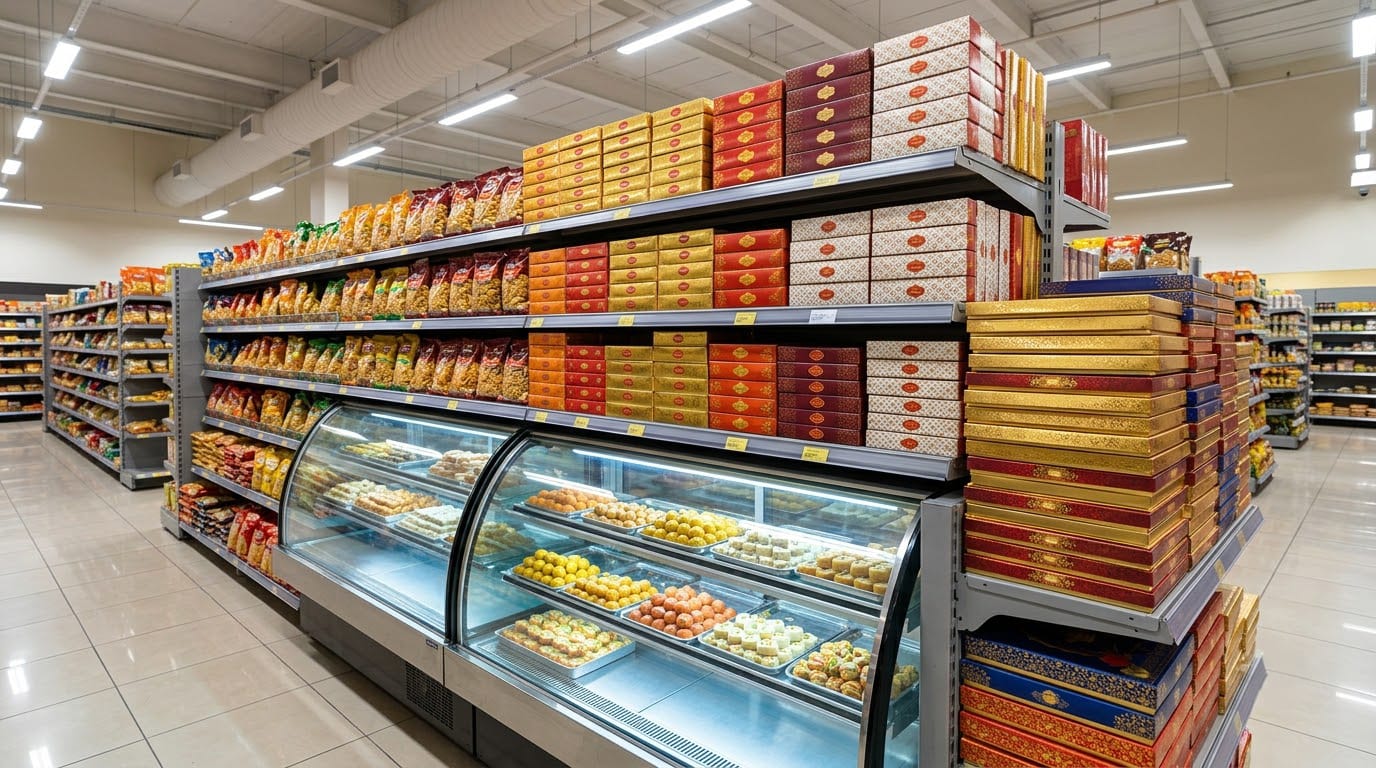
For stores near Indian communities, a fresh mithai display is a significant footfall driver — especially on weekends and during festive periods.
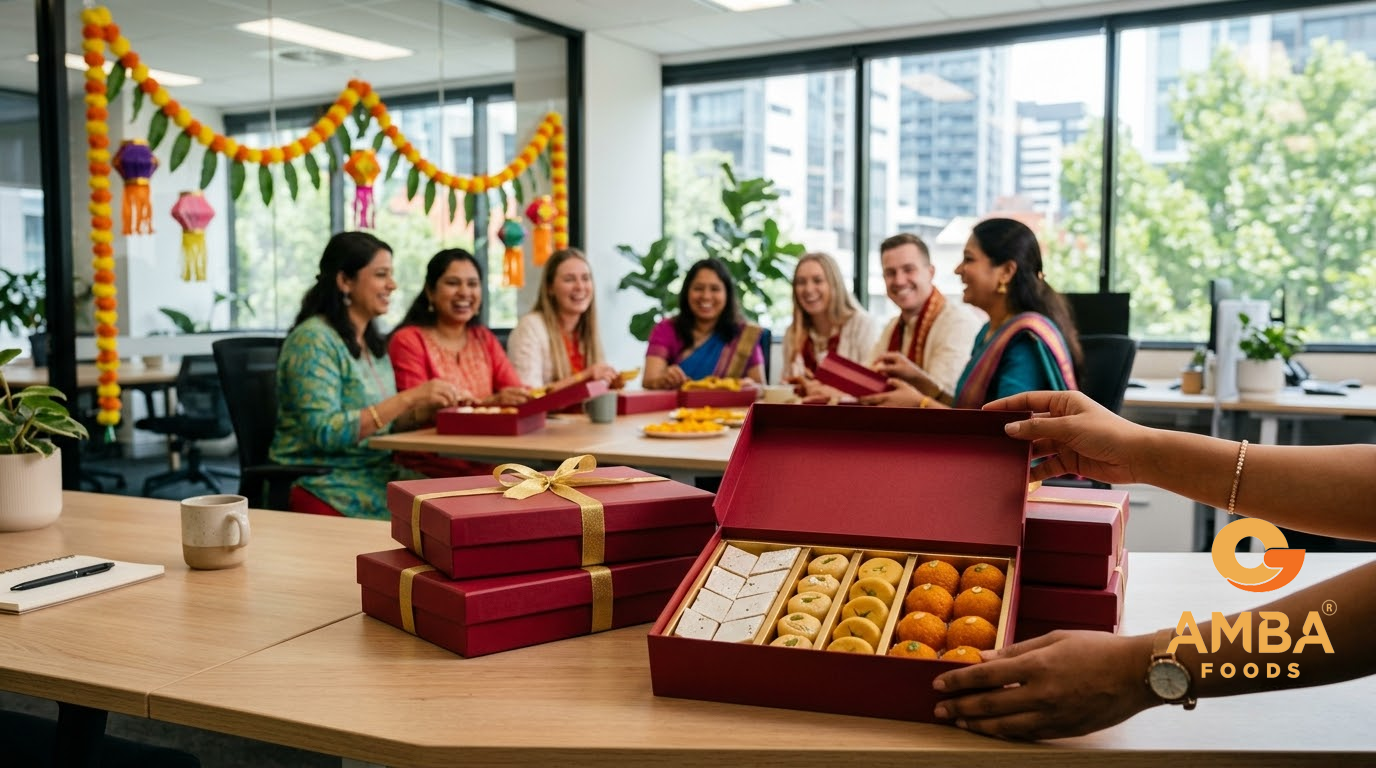
Stocking fresh Indian sweets from a Melbourne manufacturer like Amba Foods means:
- Fresh product arriving within days (not weeks)
- No artificial preservatives
- Consistent quality
- Festival-season volume availability
The Amba Foods fresh sweet range covers 80+ varieties including Motichoor Ladoo, Kaju Katli, all Barfi varieties, Cham Cham, Rasgulla, Ras Malai, Jalebi and much more.
Wholesale Supply
Stock Amba Foods Products in Your Store
Wholesale supply for retailers, restaurants and caterers across Australia. Competitive pricing, reliable delivery.
Wholesale EnquiryBuilding Your Supplier Relationships
Prioritise Local Manufacturers Over Pure Importers
A local Melbourne manufacturer can deliver to your store within 1-2 business days and maintain consistent stock levels. An importer working from overseas supply chains has longer lead times and is more vulnerable to supply disruptions.
Work With Authorised Distributors for Branded Products
When stocking recognised Indian food brands (Dunar, Rajdhani, Milan, Mazedar, Cookd etc.), buy only from authorised Australian distributors. Unauthorised channels risk non-compliant packaging, incorrect labelling and quality issues that ultimately damage your store’s reputation.
Amba Foods is an authorised Australian distributor for Cookd, Dunar, Rajdhani, Mazedar and Pachranga — meaning your store gets genuine products with correct Australian labelling from a single, accountable supplier.
Consolidate to Fewer, Better Suppliers
Many Indian grocery retailers manage 15-20 different suppliers. This creates unnecessary complexity — multiple minimum orders, multiple delivery windows, multiple invoices and multiple points of failure.
Working with a broad-range distributor like Amba Foods who stocks both own-manufactured products and multiple brand ranges allows you to consolidate significantly. One order, one invoice, one delivery.
Managing Seasonal Demand Spikes
Indian grocery demand fluctuates significantly throughout the year. Plan ahead for:
Diwali (October/November) — highest demand period of the year. Fresh sweets, gift boxes, dry fruits, special mithai varieties. Book stock 4-6 weeks in advance.
Eid (date varies) — high demand for frozen snacks, sheer khurma ingredients, vermicelli, dates, biryani masalas.
Navratri and Janmashtami — demand for fasting foods including sabudana, makhana, sendha namak, samak rice, kuttu atta.
Holi — thandai mix, gulkand, rose products, sweets.
Christmas/New Year — gift boxes and premium sweet hampers.
Contact your supplier at least 6 weeks before each major festive period to reserve stock.
Minimum Order Quantities and Cash Flow
Most wholesale Indian food suppliers have minimum order quantities (MOQs). When evaluating a supplier:
- Ask for their MOQ upfront — it should match your sales volume
- Negotiate MOQs based on your order frequency (weekly orders may have lower MOQs than monthly)
- Understand their credit terms — net 14 or net 30 are standard
For new stores or new supplier relationships, start with a trial order covering your top-selling SKUs before committing to large volumes.
What Australian Regulations Apply
All food products sold in Australian grocery stores must comply with:
- Food Standards Australia New Zealand (FSANZ) requirements
- Country of origin labelling — mandatory for all packaged food
- Allergen declarations — must be clearly displayed
- Australian English labels — all primary information must be in English
- Correct use-by/best-before dating
Products sourced from authorised distributors like Amba Foods arrive with fully compliant Australian labelling. Products sourced via unofficial channels may not — creating compliance risk for your store.
Distribution & Wholesale
Looking for an Indian Food Distributor?
Amba Foods supplies 750+ authentic Indian food products to businesses across Australia. Melbourne-manufactured + authorised brand distribution.
Get Distribution InfoSummary Checklist — Stocking Your Indian Grocery Store
Essential categories:
☐ Staple flours (atta, besan, rice flour)
☐ Dals and lentils (5+ varieties, multiple sizes)
☐ Basmati rice (3 price points minimum)
☐ Whole and ground spices
☐ Masala blends (biryani, chicken, karahi, nihari)
☐ Oils and ghee
☐ Pickles (mango, mixed, lime as minimum)
☐ Paneer and dairy
☐ Frozen snacks and breads
☐ Fresh Indian sweets (if space allows)

Supplier criteria:
☐ Local manufacturer preferred
☐ Authorised brand distributor
☐ HACCP certified
☐ Australian-compliant labelling
☐ Reliable lead times
☐ Festive season capacity
Amba Foods supplies all of the above categories — own manufactured products plus authorised brand ranges — to Indian grocery stores across Australia. Call 1300 790 350 to discuss your store’s requirements.